Best Water Testing Kits (2026): Bacteria, Lead, Pesticides, and Comprehensive Panels

Quick Answer Here’s the shortlist based on what you’re testing for: Best quick home screening: A multi-parameter strip kit (~$15-25) covering pH, hardness, chlorine, nitrate, iron, copper, lead Best bacteria (coliform/E. coli) test: A digital/lab-based bacteria kit (~$25-50) — far more reliable than a strip for germs Best lead screening: A lead-specific lab or home kit (~$20-50) Best ultra-comprehensive (get it right the first time): A certified mail-in lab panel like Tap Score/SimpleLab (~$150-350) covering bacteria, metals, pesticides, and more Best all-around value: A middle-tier lab panel (~$100-150) covering the essential health contaminants The rule: home kits are for screening and monitoring; a certified lab test is the authoritative safety answer. Don’t rely on a $15 strip to declare your well water safe to drink. See our full water testing guide for how and when to test. ...

August 6, 2026 · 9 min · Jarrod Gravison

Best Solar-Powered Water Pumps for Off-Grid Living (2026)

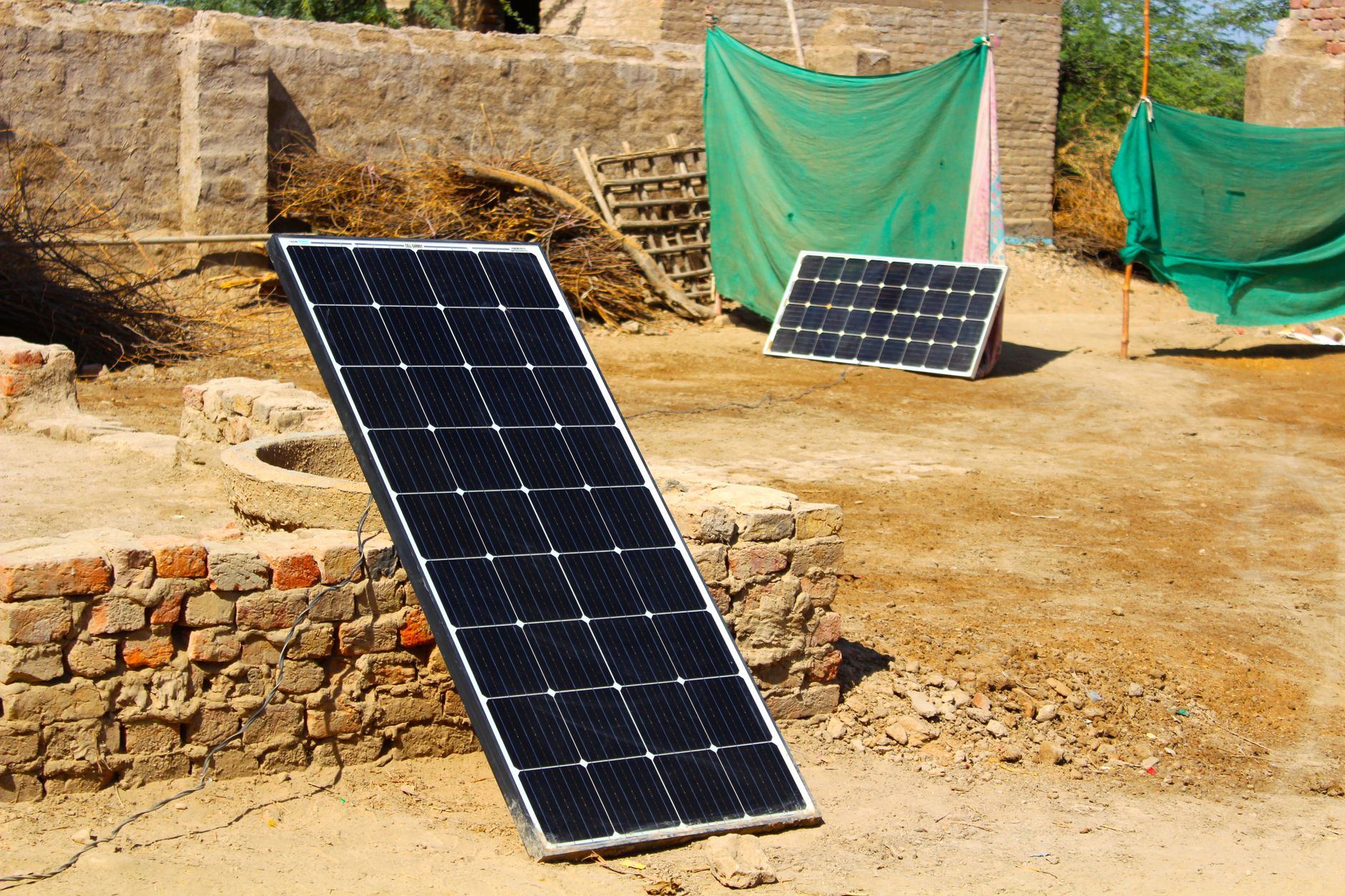
Quick Answer If you need to move water without grid power, here’s where to start: Best for deep wells: Solar submersible pump (e.g., 1 HP solar well pump kits) — lifts water from 100-400+ ft Best for rainwater tanks / low-head transfer: 12V or 24V solar surface pump with a battery — cheap, reliable, moves water between tanks Best all-in-one kit: Solar pump kits that bundle panel + controller + pump — easiest off-grid setup Best for pond/livestock tank filling: Direct solar pool/aeration pumps — pump during daylight, no battery needed Key sizing numbers (the two that matter most):- Head (feet) — how far the pump lifts water vertically. This is the #1 spec; get it wrong and nothing works. - Flow rate (GPM) — how many gallons per minute at a given head. Here’s how to match a pump to your setup and which models earn their place. — ...

August 6, 2026 · 8 min · Jarrod Gravison

Off-Grid Water Systems: Complete Setup Guide (Well + Solar Pump + Storage + Filtration)

Quick Answer A self-sufficient water system has 5 core components: Source: a well, spring, rainwater harvest, or atmospheric water generator Pumping: a solar-powered pump (the most common off-grid choice) or battery/generator pump Storage: a large pressure or gravity storage tank (200-1,000+ gallons) so you have water day and night Filtration/sanitation: sediment + carbon filters, and UV or chemical disinfection Distribution: a pressure tank + pump system to deliver water to fixtures at usable pressure Budgets: a basic off-grid setup (shallow well + solar pump + storage + filter) runs $2,000-$6,000; a full automatic system with a drilled well, large storage, and pressure distribution $8,000-$20,000+. A deep well itself is often the single biggest line item. ...

August 5, 2026 · 9 min · Jarrod Gravison

Desalination Guide: How It Works, Home vs Industrial, Cost, and Impact

Quick Answer Desalination removes salt from seawater or brackish water to make it drinkable. The two dominant methods are reverse osmosis (pushing water through a semi-permeable membrane under high pressure) and thermal distillation (boiling seawater and condensing the fresh vapor). The key numbers: Industrial plants produce huge volumes but cost $1-$3+ per 1,000 gallons (about $0.001-$0.003/gallon operating cost) and use 3-13 kWh per 1,000 gallons Home/portable desalination is far more expensive per gallon — a survival desalinator is really for emergencies Environmental costs (brine/discharge, energy use, marine intake) are the major drawbacks at scale Bottom line: Desalination makes sense at industrial scale for coastal cities, but for almost every homeowner it’s far more economical to drill a well, harvest rainwater, or use an atmospheric water generator in a humid climate. ...

August 5, 2026 · 9 min · Jarrod Gravison

Best Water Storage Containers (2026): 5-Gallon to 500-Gallon Food-Grade

Quick Answer If you want the shortlist: Best everyday 5-gallon jug: A BPA-free, airtight 5-gallon jug with a spigot or screw cap (easy to lift and rotate) Best for bulk long-term storage: 55-gallon food-grade plastic barrel Best budget bulk: A food-grade IBC tote (275 gal) on a pallet Best for a large household / off-grid: A dedicated 500+ gallon food-grade water tank (cistern) Best grab-and-go: Commercial bottled water + refillable bottles Golden rule: Only use food-grade (#2 HDPE) containers that never stored chemicals or fuel. Everything else is a contamination risk. For quantities and rotation, see our emergency water storage guide. ...

August 5, 2026 · 10 min · Jarrod Gravison

Best Rainwater Collection Systems (2026): Barrels, Cisterns, Diverters, and Pumps

Quick Answer If you want the short list: Best rain barrel overall: A 50-65 gallon food-grade barrel with a removable basket filter and spigot (look for sealed, light-blocking construction) Best budget option: A basic 40-55 gallon rain barrel under $80 Best mid-size capacity: 275-gal IBC tote (DIY favorite) Best for serious storage: Above-ground cisterns (1,000+ gal) or underground for year-round supply Must-have accessory: A first-flush diverter — costs $20-$60 and is the single biggest upgrade to water quality Before buying, work out roof area × rainfall to size your storage (our rainwater harvesting guide covers the math). Right-sizing prevents buying too little (you run dry) or too much (wasted money). ...

August 5, 2026 · 9 min · Jarrod Gravison

Atmospheric Water Generator Cost: Real Prices and Cost per Liter (2026)

Quick Answer An atmospheric water generator (AWG) has four cost components: Purchase price: $400-$8,000+ depending on output Installation: mostly free (plug-and-play) for small units; $200-$1,000 if you hardwire a large unit Electricity: the biggest ongoing cost — roughly $0.08-$0.12 per liter of water produced Maintenance/filters: $50-$150/year for filter replacements Bottom line: In typical US conditions, AWG water costs about $0.25-$0.40 per gallon all-in. That’s far cheaper than bottled water (usually $1+/gallon) but more expensive than city tap water (roughly $0.003-$0.01/gallon). An AWG is a water-independence purchase, not a money-saving one. ...

August 5, 2026 · 8 min · Jarrod Gravison

Best Atmospheric Water Generators (2026): 8 Top AWGs Compared

Quick Answer If you want the short version up front: Best overall home unit: Ecoloblue (~30-40 L/day) — great balance of output, price, and build quality Best premium/large unit: Watergen GEN-350 — serious output for whole-home or commercial use Best for emergencies/backup: Tsunami (countertop portable) — compact and affordable Best high-output workhorse: GENAQ — solid European engineering for larger needs Best on a budget: Simple countertop units under $500 Below is the full head-to-head comparison, including output, power draw, price, and who each machine is actually for. Not sure what an AWG does or whether you need one? Start with our complete atmospheric water generator guide first. ...

August 5, 2026 · 9 min · Jarrod Gravison

Atmospheric Water Generators: The Complete Guide (2026)

Quick Answer An atmospheric water generator (AWG) is a machine that pulls moisture directly out of the air, condenses it into liquid, filters it, and delivers clean drinking water. It works essentially like a dehumidifier, but with food-grade filtration, mineralization, and UV purification added so the output is safe to drink. Should you buy one? If you live somewhere humid (60%+ average relative humidity) and want water independence, an AWG can be a genuinely useful appliance. If you live in a dry climate — especially desert states like Arizona or Nevada — most mid-size AWGs will struggle to produce meaningful amounts of water and are a poor investment. See our atmospheric water generator cost guide for the full financial picture before you commit. — ...

August 5, 2026 · 11 min · Jarrod Gravison