Best Emergency Water Filters for Natural Disasters (2026)

Quick Answer When the tap stops being safe — after floods, hurricanes, earthquakes, or a boil-water advisory — your filter choice depends on how many people you’re supporting and whether the water could carry viruses (common after flooding when sewage mixes in). Best personal/emergency kit filter: LifeStraw Personal — $20, tiny, filter-as-you-sip Best family/group option: Sawyer Squeeze with a gravity bag — filter large batches fast Best if water is flood-contaminated (viruses possible): Grayl Geopress purifier, or a gravity purifier (e.g., MSR Guardian-class, or chemical treatment) Best long-term home prep: a gravity filter (like a Berkey-style or Big Berkey/countertop purifier) that treats large volumes for days The disaster-specific rule: Most portable hiking filters do NOT remove viruses. Floodwater, sewage backup, and contaminated wells create viral risk (norovirus, hepatitis A, rotavirus). For that, you need a purifier (virus-removing), chemical treatment (chlorine/iodine tabs), or boiling. Build your emergency plan around that. ...

August 6, 2026 · 9 min · Jarrod Gravison

Best Water Testing Kits (2026): Bacteria, Lead, Pesticides, and Comprehensive Panels

Quick Answer Here’s the shortlist based on what you’re testing for: Best quick home screening: A multi-parameter strip kit (~$15-25) covering pH, hardness, chlorine, nitrate, iron, copper, lead Best bacteria (coliform/E. coli) test: A digital/lab-based bacteria kit (~$25-50) — far more reliable than a strip for germs Best lead screening: A lead-specific lab or home kit (~$20-50) Best ultra-comprehensive (get it right the first time): A certified mail-in lab panel like Tap Score/SimpleLab (~$150-350) covering bacteria, metals, pesticides, and more Best all-around value: A middle-tier lab panel (~$100-150) covering the essential health contaminants The rule: home kits are for screening and monitoring; a certified lab test is the authoritative safety answer. Don’t rely on a $15 strip to declare your well water safe to drink. See our full water testing guide for how and when to test. ...

August 6, 2026 · 9 min · Jarrod Gravison

How to Build a Rainwater Collection System: DIY Step-by-Step

Quick Answer A basic DIY rainwater collection system is gutters → downspout → leaf screen → first-flush diverter → storage barrel/tank → hose tap, and you can build the whole thing for $150-$600 in a weekend using hand tools. The most important upgrade for drinkable-adjacent or garden water is a first-flush diverter that throws away the first (dirtiest) water of every rain. Here’s the full build, step by step, with realistic costs, tools, and sizing. ...

August 6, 2026 · 10 min · Jarrod Gravison

Water Testing Guide: Home Kits, Lab Tests, and What to Test For

Quick Answer Testing water quality comes down to two approaches: Home test kits — fast, cheap ($10-$30), good for basic screening of pH, hardness, chlorine, some metals; but limited accuracy and coverage. Good for routine checks and peace of mind. Certified laboratory tests — accurate, comprehensive ($50-$250), the gold standard for drinking-water safety, especially for well water. Required to catch things kits miss (bacteria, pesticides, arsenic, nitrates, etc.) When to test: ...

August 6, 2026 · 8 min · Jarrod Gravison

Best Solar-Powered Water Pumps for Off-Grid Living (2026)

Quick Answer If you need to move water without grid power, here’s where to start: Best for deep wells: Solar submersible pump (e.g., 1 HP solar well pump kits) — lifts water from 100-400+ ft Best for rainwater tanks / low-head transfer: 12V or 24V solar surface pump with a battery — cheap, reliable, moves water between tanks Best all-in-one kit: Solar pump kits that bundle panel + controller + pump — easiest off-grid setup Best for pond/livestock tank filling: Direct solar pool/aeration pumps — pump during daylight, no battery needed Key sizing numbers (the two that matter most):- Head (feet) — how far the pump lifts water vertically. This is the #1 spec; get it wrong and nothing works. - Flow rate (GPM) — how many gallons per minute at a given head. Here’s how to match a pump to your setup and which models earn their place. — ...

August 6, 2026 · 8 min · Jarrod Gravison

Water Rights and Permits Guide 2026: What You Need to Know

Quick Answer In most cases, yes — you likely need some form of permit or must register your water use, but exactly which one depends on three things: your state/province, your water source (well, stream, lake, or rainwater), and how much you plan to use. The short version: Private residential well: Generally needs a drilling/groundwater permit ($100-$500 in most states), though a handful exempt simple household wells. Surface water (stream, lake, river): Almost always requires a water right confirmed by the state — you can’t just pump from a creek. Rainwater collection: Wide open in most states; a few (like Colorado and Utah) historically restricted it, though rules have loosened. Large or irrigation use: Expect a full beneficial-use permit and possibly a metering/reporting requirement. The rules are stricter and more expensive the more water you take. Skipping permits can mean fines, forced removal of your system, and legal battles with neighbors. Here’s the practical breakdown. ...

August 6, 2026 · 10 min · Jarrod Gravison

Off-Grid Water Systems: Complete Setup Guide (Well + Solar Pump + Storage + Filtration)

Quick Answer A self-sufficient water system has 5 core components: Source: a well, spring, rainwater harvest, or atmospheric water generator Pumping: a solar-powered pump (the most common off-grid choice) or battery/generator pump Storage: a large pressure or gravity storage tank (200-1,000+ gallons) so you have water day and night Filtration/sanitation: sediment + carbon filters, and UV or chemical disinfection Distribution: a pressure tank + pump system to deliver water to fixtures at usable pressure Budgets: a basic off-grid setup (shallow well + solar pump + storage + filter) runs $2,000-$6,000; a full automatic system with a drilled well, large storage, and pressure distribution $8,000-$20,000+. A deep well itself is often the single biggest line item. ...

August 5, 2026 · 9 min · Jarrod Gravison

Greywater Recycling Guide: What's Legal, What Works, and Cost Savings

Quick Answer Greywater is the gently used water from sinks, showers, bathtubs, and washing machines (everything except “blackwater” from toilets). Greywater recycling captures it and reuses it — most commonly for landscape irrigation, and in more advanced setups for toilet flushing. The key facts: ~50-80% of residential wastewater is greywater (showers, laundry, sinks) — a big reusable resource Safe for irrigation when you use biodegradable, low-salt, low-boron products and don’t let it pool or touch edible parts of plants Legal status varies wildly: some states encourage it with simple permits, others effectively ban it Simple systems cost: DIY laundry-to-landscape systems from $100-$1,000; permitted whole-house systems $2,000-$10,000+ Savings: greywater reuse can cut household water use (and sewer/water bills) by 30-50% Bottom line: For off-grid or water-conscious homeowners, greywater irrigation is one of the highest-value, lowest-effort water-savings you can implement — but you must check your local code first, since legality determines everything. ...

August 5, 2026 · 9 min · Jarrod Gravison

How to Find Water in the Wilderness: Survival Sourcing and Purification

Quick Answer The fastest way to find safe water in the wilderness: Go down, not up. Water collects in valleys, ravines, and depressions — head downhill for seeps, springs, and streams. Follow the green. Lush, green vegetation clusters and animal trails often converge on water sources. Look for indicators. Dense fly/mosquito swarms, moist soil, and low-lying rock bases (which hold seeps) signal water. Watch the morning. Early morning fog or frost on grass can be collected (fog fences, dew collection). Always purify it. Whatever you find — filter, boil, or treat — before drinking. See our purification methods guide. Never stop moving/downed by thirst — prioritize finding water if you’re in a true survival scenario. But never rely on a single plant/rock and skip purification when you reach it. ...

August 5, 2026 · 9 min · Jarrod Gravison

Water Purification Methods Ranked: Boiling, Chemical, UV, Filtration, and Distillation

Quick Answer The right method depends on your situation, but here’s the ranking by overall reliability: Boiling — the most universal, guaranteed method (kills virtually everything) Reverse-osmosis + UV filtration — best for home tap purification (removes contaminants + microbes) Purifier filters (e.g., Grayl) — best portable option (removes bacteria, protozoa, and viruses) Filter (e.g., LifeStraw/Sawyer) — great for backcountry (bacteria + protozoa, not viruses/chemicals) UV light (e.g., SteriPEN) — kills microbes fast, but needs clear water and power Chemical treatment (chlorine/iodine/tablets) — lightweight and effective (microbes, but slow; iodine tastes bad and has limits) Golden rule: Boiling always works for pathogens. For chemical contaminants (lead, pesticides, salts), boiling does nothing — you need distillation, reverse osmosis, or a specialty filter. ...

August 5, 2026 · 8 min · Jarrod Gravison

Best Portable Water Filters (2026): LifeStraw, Sawyer, Katadyn, and Grayl Compared

Quick Answer If you only take one water filter outdoors, here’s the shortlist: Best overall for backpacking: Sawyer Squeeze — lightweight, high flow, versatile, long-lasting filter Best budget / grab-and-go: LifeStraw Personal — tiny, dirt cheap, filter-as-you-sip Best for treating large amounts / groups: Katadyn BeFree or Sawyer Squeeze with a bag Best all-in-one bottle: Grayl Geopress — filters + purifies (removes viruses), great for travel Best for travel/unknown sources: Grayl — full purification Key distinction: A “filter” removes bacteria and protozoa; a “purifier” also removes viruses (via chemical/electrochemical or specific membranes). For lakes/streams in the backcountry, a filter is usually enough. For questionable drinking-water sources abroad, use a purifier. ...

August 5, 2026 · 9 min · Jarrod Gravison

Desalination Guide: How It Works, Home vs Industrial, Cost, and Impact

Quick Answer Desalination removes salt from seawater or brackish water to make it drinkable. The two dominant methods are reverse osmosis (pushing water through a semi-permeable membrane under high pressure) and thermal distillation (boiling seawater and condensing the fresh vapor). The key numbers: Industrial plants produce huge volumes but cost $1-$3+ per 1,000 gallons (about $0.001-$0.003/gallon operating cost) and use 3-13 kWh per 1,000 gallons Home/portable desalination is far more expensive per gallon — a survival desalinator is really for emergencies Environmental costs (brine/discharge, energy use, marine intake) are the major drawbacks at scale Bottom line: Desalination makes sense at industrial scale for coastal cities, but for almost every homeowner it’s far more economical to drill a well, harvest rainwater, or use an atmospheric water generator in a humid climate. ...

August 5, 2026 · 9 min · Jarrod Gravison

Best Water Storage Containers (2026): 5-Gallon to 500-Gallon Food-Grade

Quick Answer If you want the shortlist: Best everyday 5-gallon jug: A BPA-free, airtight 5-gallon jug with a spigot or screw cap (easy to lift and rotate) Best for bulk long-term storage: 55-gallon food-grade plastic barrel Best budget bulk: A food-grade IBC tote (275 gal) on a pallet Best for a large household / off-grid: A dedicated 500+ gallon food-grade water tank (cistern) Best grab-and-go: Commercial bottled water + refillable bottles Golden rule: Only use food-grade (#2 HDPE) containers that never stored chemicals or fuel. Everything else is a contamination risk. For quantities and rotation, see our emergency water storage guide. ...

August 5, 2026 · 10 min · Jarrod Gravison

Emergency Water Storage: How Much, What Containers, and How Long

Quick Answer How much: Store 1 gallon per person per day for at least 2 weeks — that’s 14 gallons per person minimum. For a family of 4, that’s 56 gallons. Double it to 2 gallons (drinking + sanitation) if you can. Best containers: Food-grade plastic (HDPE #2), ideally 5-gallon stackable jugs or 55-gallon barrels, plus a few single-use commercial water bottles for grab-and-go. How long does stored water last? Commercially bottled water can last 1-2 years (check the date); freshly filled, properly cleaned and sealed containers can store safely 6-12 months if rotated, or longer with treatment. ...

August 5, 2026 · 9 min · Jarrod Gravison

Best Rainwater Collection Systems (2026): Barrels, Cisterns, Diverters, and Pumps

Quick Answer If you want the short list: Best rain barrel overall: A 50-65 gallon food-grade barrel with a removable basket filter and spigot (look for sealed, light-blocking construction) Best budget option: A basic 40-55 gallon rain barrel under $80 Best mid-size capacity: 275-gal IBC tote (DIY favorite) Best for serious storage: Above-ground cisterns (1,000+ gal) or underground for year-round supply Must-have accessory: A first-flush diverter — costs $20-$60 and is the single biggest upgrade to water quality Before buying, work out roof area × rainfall to size your storage (our rainwater harvesting guide covers the math). Right-sizing prevents buying too little (you run dry) or too much (wasted money). ...

August 5, 2026 · 9 min · Jarrod Gravison

Rainwater Harvesting Guide: Collection, Storage, Filtration, and Legal

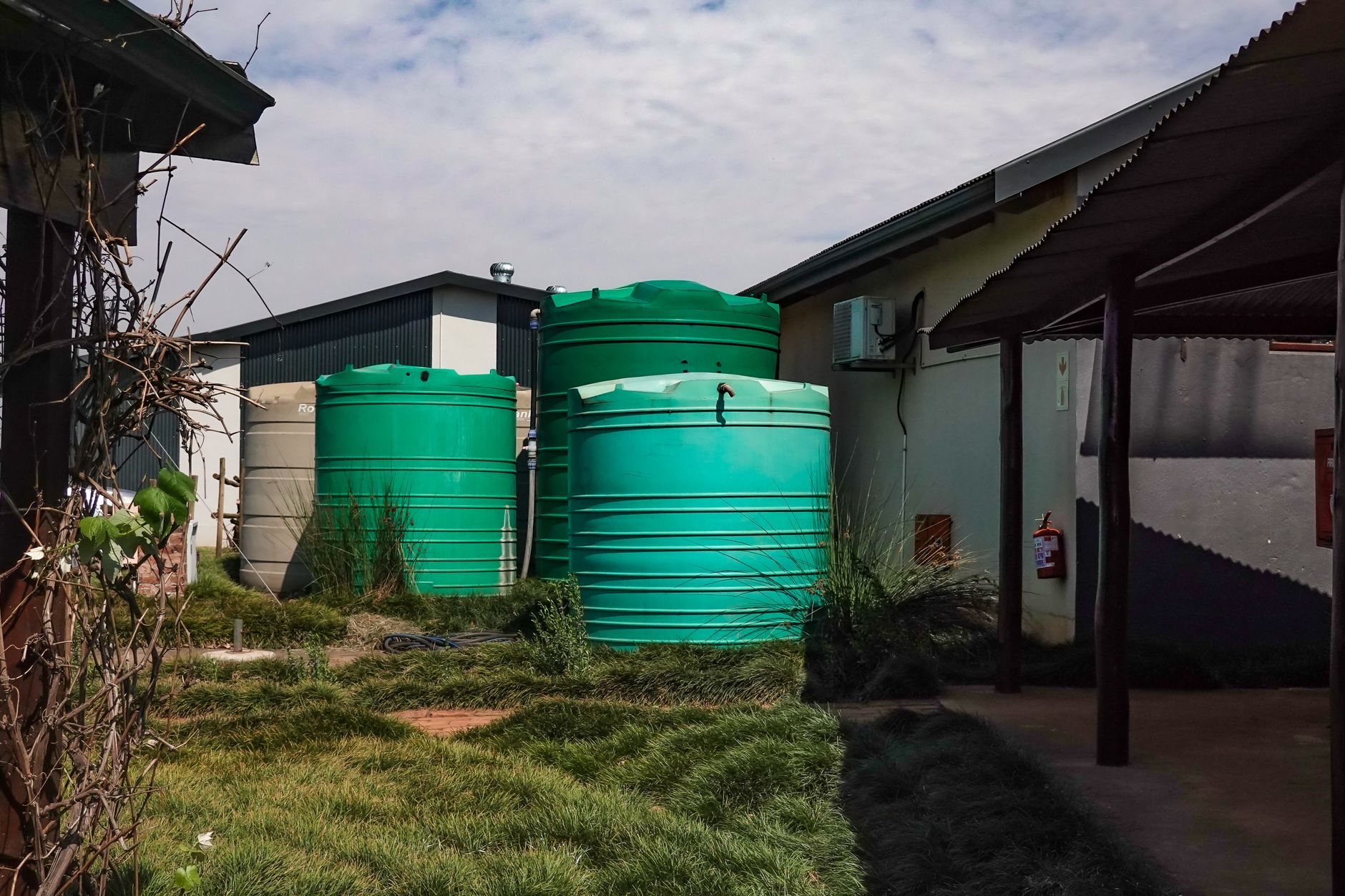
Quick Answer Rainwater harvesting is simply catching rain (usually off your roof via gutters), storing it (in barrels, cisterns, or tanks), and filtering it for use. It’s one of the oldest, cheapest, and most popular ways to supplement your water supply. The quick version: Catch: Direct roof gutters into a downspout adapter with a first-flush diverter Filter: A screen/leaf filter at entry, plus inline filters Store: In a food-grade tank (55-gallon barrels up to multi-thousand-gallon cisterns) Use: Primarily for irrigation, toilet flushing, and garden — and, with the right filtration + disinfection, some people drink it (though that’s regulated and debated) Bottom line: Home rainwater harvesting works best for non-potable uses (watering, flushing, washing) that are legal almost everywhere and save real money. Potable rainwater (drinking) is technically possible but heavily regulated and requires serious filtration + UV treatment. ...

August 5, 2026 · 9 min · Jarrod Gravison

Well Drilling Cost: Full Breakdown by Depth, Region, and Method (2026)

Quick Answer The all-in cost of a new drilled water well — permits, drilling, casing, pump, pressure tank, and wiring — typically runs $5,000-$15,000 for a standard residential installation. Drilling alone: usually quoted $25-$65 per foot (some regions $15-$80/ft) A common 150-foot well: $3,750-$9,750 for drilling Pump + pressure tank + controls: $700-$1,700 extra Permits: $100-$500 Depth is the single biggest cost driver, but geology, region, and whether you hire a pro all matter. Here’s the full picture. First time doing this? Our well drilling guide covers the whole process. ...

August 5, 2026 · 9 min · Jarrod Gravison

Well Drilling Guide: Costs, Permits, Types, and What to Expect

Quick Answer Drilling a well gives you a private, mostly independent water supply — no monthly water bill, no reliance on municipal delivery, and usually a reliable, high-quality source for a well-maintained property. The short version: A typical residential water well costs $5,000-$15,000 to drill, install, and equip, produces 5-30 gallons per minute (plenty for a home), and, with proper siting and construction, can last 30-50+ years. But you need permits, a licensed driller, and the geology under your property has to cooperate — groundwater isn’t guaranteed. ...

August 5, 2026 · 9 min · Jarrod Gravison

Atmospheric Water Generator Cost: Real Prices and Cost per Liter (2026)

Quick Answer An atmospheric water generator (AWG) has four cost components: Purchase price: $400-$8,000+ depending on output Installation: mostly free (plug-and-play) for small units; $200-$1,000 if you hardwire a large unit Electricity: the biggest ongoing cost — roughly $0.08-$0.12 per liter of water produced Maintenance/filters: $50-$150/year for filter replacements Bottom line: In typical US conditions, AWG water costs about $0.25-$0.40 per gallon all-in. That’s far cheaper than bottled water (usually $1+/gallon) but more expensive than city tap water (roughly $0.003-$0.01/gallon). An AWG is a water-independence purchase, not a money-saving one. ...

August 5, 2026 · 8 min · Jarrod Gravison

Best Atmospheric Water Generators (2026): 8 Top AWGs Compared

Quick Answer If you want the short version up front: Best overall home unit: Ecoloblue (~30-40 L/day) — great balance of output, price, and build quality Best premium/large unit: Watergen GEN-350 — serious output for whole-home or commercial use Best for emergencies/backup: Tsunami (countertop portable) — compact and affordable Best high-output workhorse: GENAQ — solid European engineering for larger needs Best on a budget: Simple countertop units under $500 Below is the full head-to-head comparison, including output, power draw, price, and who each machine is actually for. Not sure what an AWG does or whether you need one? Start with our complete atmospheric water generator guide first. ...

August 5, 2026 · 9 min · Jarrod Gravison

Atmospheric Water Generators: The Complete Guide (2026)

Quick Answer An atmospheric water generator (AWG) is a machine that pulls moisture directly out of the air, condenses it into liquid, filters it, and delivers clean drinking water. It works essentially like a dehumidifier, but with food-grade filtration, mineralization, and UV purification added so the output is safe to drink. Should you buy one? If you live somewhere humid (60%+ average relative humidity) and want water independence, an AWG can be a genuinely useful appliance. If you live in a dry climate — especially desert states like Arizona or Nevada — most mid-size AWGs will struggle to produce meaningful amounts of water and are a poor investment. See our atmospheric water generator cost guide for the full financial picture before you commit. — ...

August 5, 2026 · 11 min · Jarrod Gravison