Hot water is one of the biggest energy draws in an off-grid home. If you rely on a well, a spring, or a rainwater cistern, a solar water heater can cut that load to almost zero. It works without grid power, and most designs need no backup generator. You still need to size the system to your daily use and climate. This guide walks through five solar water heater types that actually work off-grid. Each type fits different freeze risks, budgets, and hot water demands. Before you buy, understand how a solar thermal system connects to your existing off-grid water systems.
Water quality matters as much as water temperature. The EPA’s drinking water standards set legal limits for over 90 contaminants. If your water heater stores water at the wrong temperature, bacteria like Legionella can grow. A solar water heater that reaches 140 degrees Fahrenheit helps kill those pathogens. Still, you should test your well water quality before drinking it hot or cold. Many off-grid setups also use a solar water pump to move water from a cistern or well to the collector. That combination keeps the whole system fully off-grid.
Freezing is the number one killer of solar water heaters. A hard freeze can split copper pipes and crack storage tanks in one night. If you live where temperatures drop below 32 degrees Fahrenheit, choose a drainback or closed-loop antifreeze design. You can also winterize your water systems with drain valves and insulation. Passive batch heaters need to be drained or moved indoors for winter. Active systems with antifreeze cost more but keep working through cold snaps. A family of four uses about 80 gallons of hot water daily. Match collector area to that load.
Efficiency ratings vary widely by collector type. Flat plate collectors convert about 60 to 70 percent of sunlight into heat. Evacuated tube collectors do better in cold or cloudy weather because they lose less heat. Batch systems are cheaper but only work well in full sun and warm air. Your choice depends on whether you need year-round hot water or just seasonal use. The comparison below breaks down each type by cost, freeze protection, and off-grid power needs. Use the WHO guidelines for water safety if you plan to use solar-heated water for drinking or food prep.
How Do the Top Options Compare?
| Type | Best For | Price | Efficiency | Freeze Risk |
|---|---|---|---|---|
| Batch (ICS) | Warm climates, cabins, seasonal use | Check price on Amazon | 50-60% | High |
| Flat-Plate Thermosiphon | Year-round off-grid homes in moderate climates | Check price on Amazon | 60-70% | Moderate |
| Evacuated Tube Active | Cold climates, maximum winter heat | Check price on Amazon | 70%+ | Low with antifreeze |
| Drainback | Freeze-prone areas, simple maintenance | Check price on Amazon | 65-75% | Very low |
| Closed-Loop Antifreeze | Harsh winters, large households | Check price on Amazon | 70-85% | Very low |
Price cells link to Amazon search results for current product pricing. Installation labor, roof modifications, and tax credits are not included. Always size your system to your daily hot water use and local freeze risk.
1. Batch (ICS) Solar Water Heater , Warm climates, cabins, and seasonal use
A batch solar water heater, also called an integral collector storage system, is a black tank inside a glazed box. Sunlight heats the tank directly. No pump moves water. No controller runs valves. Cold supply pressure pushes hot water out when you open a faucet. That simplicity keeps costs low. You can build one from a used water heater tank and a glass box for under $1,000. For a cabin or tiny home, a batch heater can deliver 30 to 50 gallons of hot water on a sunny day. It pairs well with a gravity-fed water supply if you collect rain or spring water.
The downside is freeze risk. Water sits in the collector overnight, so a hard freeze can split the tank. Many owners drain the system in fall or move it inside. Batch heaters also lose heat quickly after sunset because the tank is outside. Use one only where nighttime temperatures stay above 40 degrees Fahrenheit. If you need pressurized hot water, the batch tank must connect to a small pressure pump or gravity-fed supply. For off-grid use, choose a model with a heat exchanger if you plan to use the water for drinking.
Key strengths:
- ✅ Low upfront cost, often under $1,000 for a DIY build
- ✅ No pump or controller means zero electricity draw
- ✅ Simple design with few parts to break
- ✅ Heats water quickly in full sun
- ❌ Freezes easily in cold weather
- ❌ Loses heat overnight because the tank is outside
- ❌ Limited hot water capacity of 30 to 50 gallons per day
Who it’s for: Choose a batch heater if you live in a warm climate and want the cheapest possible off-grid hot water.
2. Flat-Plate Thermosiphon System , Year-round off-grid homes in moderate climates
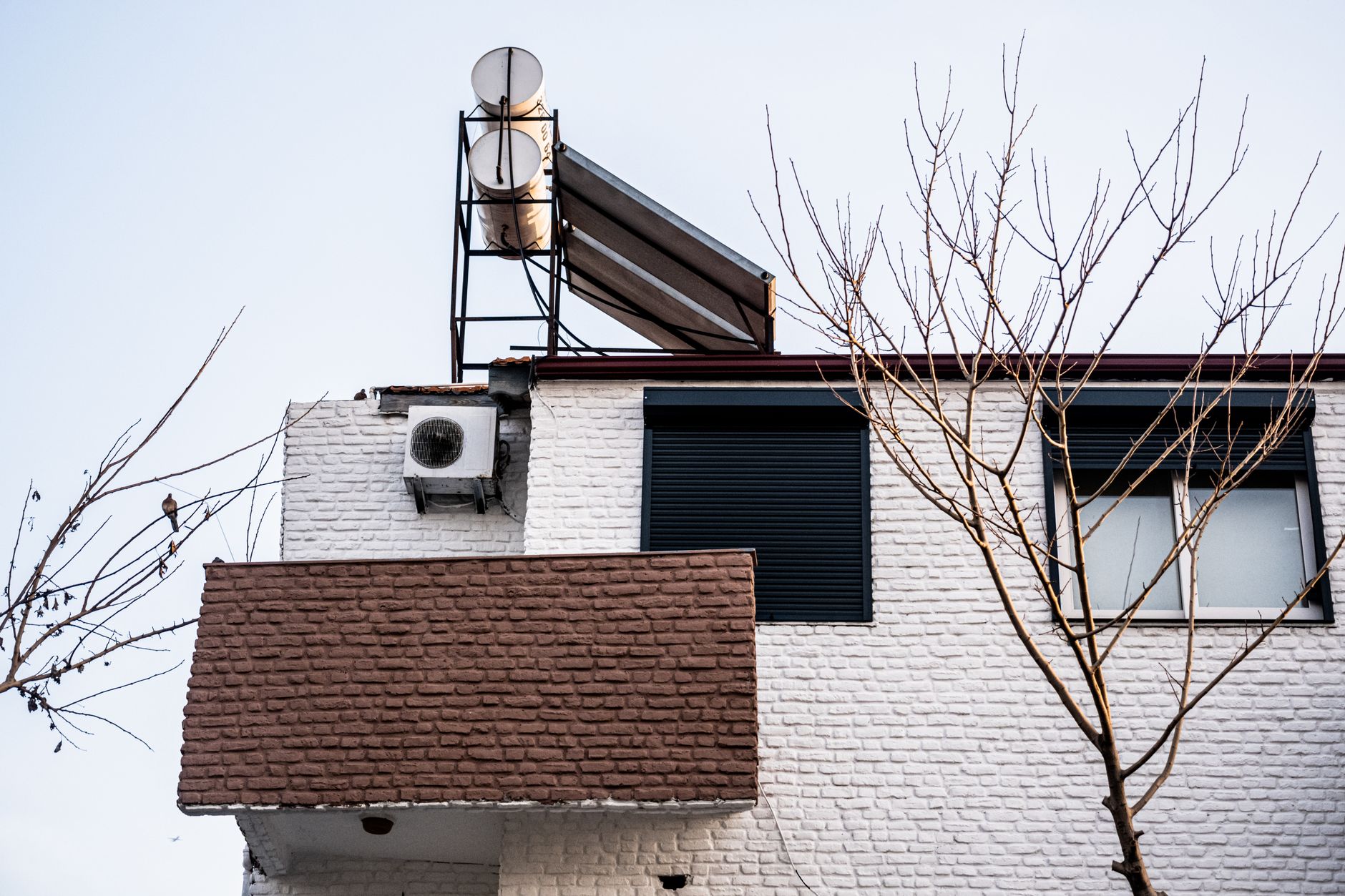
A flat-plate thermosiphon system uses a roof-mounted collector and a separate storage tank. The tank sits above the collector. Warm water rises from the collector into the tank. Cold water sinks back down. This passive loop needs no pump and no solar panel. A family of four can draw 80 gallons of hot water per day from a properly sized system. Flat plate collectors convert 60 to 70 percent of sunlight into heat. In an off-grid home, this system connects directly to your pressure tank or gravity line. It works well with well drilling projects that already have a storage tank.
Freeze protection is the weak point. A flat-plate thermosiphon can freeze if water stays in the collector on a cold night. Some models use a heat exchanger and potable water in the tank, but the collector loop still needs drainback valves or manual draining. In USDA zones 6 and colder, add a drainback reservoir or choose an evacuated tube system. Maintenance is simple: flush the collector once a year and check for scale buildup. If you have hard water, test it first with a simple hardness strip.
Key strengths:
- ✅ No pump or controller required
- ✅ Supplies enough hot water for a family of four
- ✅ Lower cost than active systems
- ✅ 60 to 70 percent collector efficiency in full sun
- ❌ Freeze risk without add-on drainback or draining
- ❌ Storage tank must sit above the collector
- ❌ Less effective in cloudy or very cold weather
Who it’s for: Pick a flat-plate thermosiphon if you want reliable daily hot water in a warm or moderate climate without using electricity.
3. Evacuated Tube Active System , Cold climates and maximum winter heat
Evacuated tube collectors use rows of glass tubes with a vacuum inside. The vacuum acts like insulation, so the tubes lose very little heat to cold air. This design works at temperatures well below freezing. It can produce useful heat even on cloudy days. Active systems add a small pump and controller. The pump draws power from a PV panel or battery. A closed loop of antifreeze moves heat from the collector to a storage tank. A water storage tank maintenance guide helps you keep the tank clean and safe.
Expect to pay more for this type. Installed costs run $8,000 to $12,000. The payoff is winter performance. Evacuated tubes can reach 70 percent efficiency in cold, partly cloudy conditions where flat plates might produce nothing. The downside is complexity. Pumps, controllers, and sensors can fail. You also need a small electrical source, usually a 20-watt PV panel. If you want true off-grid reliability, pair an evacuated tube system with a small battery bank.
Key strengths:
- ✅ Excellent cold weather performance
- ✅ High efficiency even in low light
- ✅ Closed loop with antifreeze prevents freezing
- ✅ Works on a small PV panel or battery
- ❌ Expensive upfront and to repair
- ❌ Requires a pump and controller, adding failure points
- ❌ Glass tubes can break from hail or debris
Who it’s for: Choose an evacuated tube active system if you live in a cold climate and want hot water through the winter.
4. Drainback Solar Water Heater , Freeze-prone areas with simple maintenance
A drainback system uses water as the heat transfer fluid, but it drains by gravity when the pump stops. The collector loop only holds water when the pump runs. When the sun goes down or the tank reaches temperature, the pump shuts off and water drains into a small reservoir. That makes freeze damage almost impossible. No antifreeze means no messy fluid changes. You can build a drainback system with a flat plate or evacuated tube collector. In an off-grid home, the pump can run from a small PV panel with a direct current motor.
Drainback systems cost less than closed-loop antifreeze systems. A typical installed price ranges from $5,000 to $9,000. The reservoir tank needs to sit below the collector and above the pump. That can be hard on a sloped roof. Air in the lines can also cause pump cavitation if the layout is wrong. But overall, drainback balances freeze protection and low maintenance for off-grid users. Make sure to size the drainback reservoir correctly. A contractor or experienced DIYer should calculate the collector volume. If temperatures drop hard, you can still winterize your water systems with extra drain valves.
Key strengths:
- ✅ Automatic freeze protection without antifreeze
- ✅ Lower maintenance than closed-loop systems
- ✅ Works with flat plate or evacuated tube collectors
- ✅ Long system life with few chemical issues
- ❌ Reservoir placement can be tricky
- ❌ Pump must be sized correctly to avoid cavitation
- ❌ Slightly lower efficiency in very cold weather than antifreeze
Who it’s for: Pick a drainback system if you want freeze protection and minimal maintenance without using antifreeze.
5. Closed-Loop Antifreeze System , Harsh winters and large households
A closed-loop antifreeze system circulates a propylene glycol solution through the collector and a heat exchanger. The potable water never touches the collector. That separation is safer for drinking water. The antifreeze loop stays pressurized, so the pump runs continuously when there is heat to collect. Because the fluid does not drain, the system works well even in extreme cold. Installed prices run $8,000 to $12,000. That is high, but the system delivers hot water in temperatures down to minus 40 degrees Fahrenheit.
The tradeoffs are maintenance and complexity. Antifreeze breaks down over time and becomes acidic. You must check the pH yearly and replace the fluid every 5 to 7 years. Too much heat on a sunny day can overheat the antifreeze and turn it to sludge. A heat dump or expansion tank is required. If you have a large family or run a small farm, this is often the best choice. Test your potable water after the heat exchanger to confirm it stays safe. The CDC’s drinking water guidelines also recommend maintaining water heater temperatures above 120 degrees Fahrenheit to prevent Legionella.
Key strengths:
- ✅ Reliable in extreme cold
- ✅ Safe for potable water because heat exchanger separates fluids
- ✅ Works with large household demand
- ✅ No drainback reservoir needed
- ❌ High upfront cost
- ❌ Annual antifreeze pH testing and periodic fluid replacement
- ❌ Risk of overheating if the system is undersized
Who it’s for: Choose a closed-loop antifreeze system if you need dependable hot water in a harsh winter climate and can handle the maintenance.
Frequently Asked Questions
Which solar water heater type works best off-grid?
Passive thermosiphon and drainback systems work best because they need no utility power. Thermosiphon systems use natural convection. Drainback systems use a small pump that can run on a PV panel. Both avoid complex controls.
Can a solar water heater provide enough hot water in winter?
Yes, if you choose evacuated tube or closed-loop antifreeze systems. They keep working below freezing. A family of four needs about 80 gallons per day. Size the collector area to your winter sun hours.
Do I need a backup water heater?
Most off-grid homes keep a small backup like a propane on-demand heater. Cloudy stretches last several days in many regions. A backup prevents cold showers and protects against bacteria growth.
How long do solar water heaters last?
Flat plate and evacuated tube collectors often last 20 to 25 years. Storage tanks last 10 to 15 years. Pumps and controllers need replacement sooner. Regular flushing extends tank life.
What maintenance does a solar water heater need?
Flush the collector and tank once a year. Check antifreeze pH in closed-loop systems annually. Replace antifreeze every 5 to 7 years. Inspect roof mounts, valves, and seals before winter.
Are solar water heaters safe for potable water?
Yes, if the system uses a heat exchanger or approved potable materials. Maintain storage tank temperatures above 120 degrees Fahrenheit to prevent Legionella. Test your water source regularly for contaminants.
What Should You Remember?
- Passive simplicity: Batch and thermosiphon systems need no pump and run fully off-grid.
- Freeze protection: Drainback and closed-loop antifreeze designs survive hard freezes.
- Cold climate winner: Evacuated tube collectors produce heat in low light and freezing temps.
- Budget option: Batch heaters cost under $1,000 but only work in warm regions.
- Efficiency: Flat plate collectors convert 60 to 70 percent of sunlight into heat.
- Maintenance: Closed-loop antifreeze needs yearly pH checks and fluid replacement every 5 to 7 years.
This article is for general information only. Water purification and storage carry health and safety risks , always follow local regulations and manufacturer guidance.