Gravity does all the work on every setup in this guide. You put water uphill, run a line downhill, and let physics handle the pressure. No booster pump, no electric bill, no moving parts to fail at 2 a.m. during an outage. Off-grid homeowners have used this trick for a century, and it still beats a pressure tank for reliability. The tradeoff is blunt: you need elevation, and elevation is the one thing you cannot buy. This comparison covers five gravity fed water system setups that work in the real world. Some need a hillside. Some need a tower. All of them move water without a pump running. If you are still mapping out your land, start with our off-grid water systems overview before you dig a single trench.
The math is simple and unforgiving. Every 2.31 feet of vertical drop between your tank and your faucet gives you 1 psi of pressure. A tank sitting 30 feet above the cabin delivers 13 psi. That runs a shower, a sink, and a toilet. It will not run a pressure washer or a long garden hose. Push the same tank to 100 feet of elevation and you get 43 psi, which feels like city water. Most builders aim for 30 to 50 psi at the fixtures, and that means 70 to 115 feet of vertical drop somewhere on the property. If your land is flat, you build the drop with a tower and accept the compromise.
I compared these five setups on source type, elevation required, storage volume, flow at the tap, filtration burden, and winter maintenance. Two numbers matter most when you are planning: how many gallons per day the source can deliver, and how many gallons you can hold in reserve. Storage is cheap insurance. A 1,550-gallon tank carries a family of four for roughly two weeks at 100 gallons per day. Water quality matters just as much on a gravity system, because low pressure makes some treatment methods fussy and pushes you toward gravity-friendly options like ceramic and carbon block filters. The EPA’s drinking water standards set maximum contaminant levels for more than 90 substances, and those limits apply to your spring or creek just as much as they apply to a municipal utility’s water.
Interest in gravity systems keeps climbing with every dry summer and every grid outage. Springs that ran year round in the 1990s now go dry in August across parts of the West and Southeast. Well drillers are booked months out in some counties, and the cost of drilling a new well keeps rising with rig availability and casing prices. A gravity setup lets you hedge against all of it. You add storage now, plumb the distribution line once, and upgrade the source later without tearing out the whole system. Before you buy a tank, read our water storage tank maintenance guide. The mistakes that wreck gravity systems are almost always storage mistakes, not pressure mistakes.
How Do the Top Options Compare?
| Setup | Best For | Head or Lift | Storage | Daily Output | Check price |
|---|---|---|---|---|---|
| Elevated Tank Tower | Flat ground, mixed sources | 25-40 ft tower | 500-2,500 gal | 50-200 gal refill | Check price |
| Natural Spring Gravity Feed | Hillside springs | 30-115 ft natural drop | 0-1,000 gal buffer | 1,400-14,000 gal source | Check price |
| Rainwater Cistern Gravity | Roof capture, dry seasons | 10-40 ft drop | 500-5,000 gal | 600 gal per inch of rain | Check price |
| Creek or Pond Gravity Intake | High-volume surface water | 20-80 ft drop | 100-1,000 gal buffer | 200-1,000 gal/day | Check price |
| Solar Pump to Elevated Storage | Drilled wells, low-yield sources | 100-400 ft lift | 300-2,500 gal | 100-1,000 gal/day | Check price |
Head figures are measured vertically from the water surface in the tank to the highest fixture, not the length of the pipe run. Flow rates assume a 1-inch distribution line at 20 to 40 psi and will drop with undersized pipe, long runs, or partially clogged filters. Daily output numbers are planning estimates for a temperate climate with average rainfall and normal household use. Check local water rights and permit rules before you divert a spring or creek, and test any untreated source before drinking from it.
1. Elevated Tank Tower Setup , Best for flat ground and mixed water sources
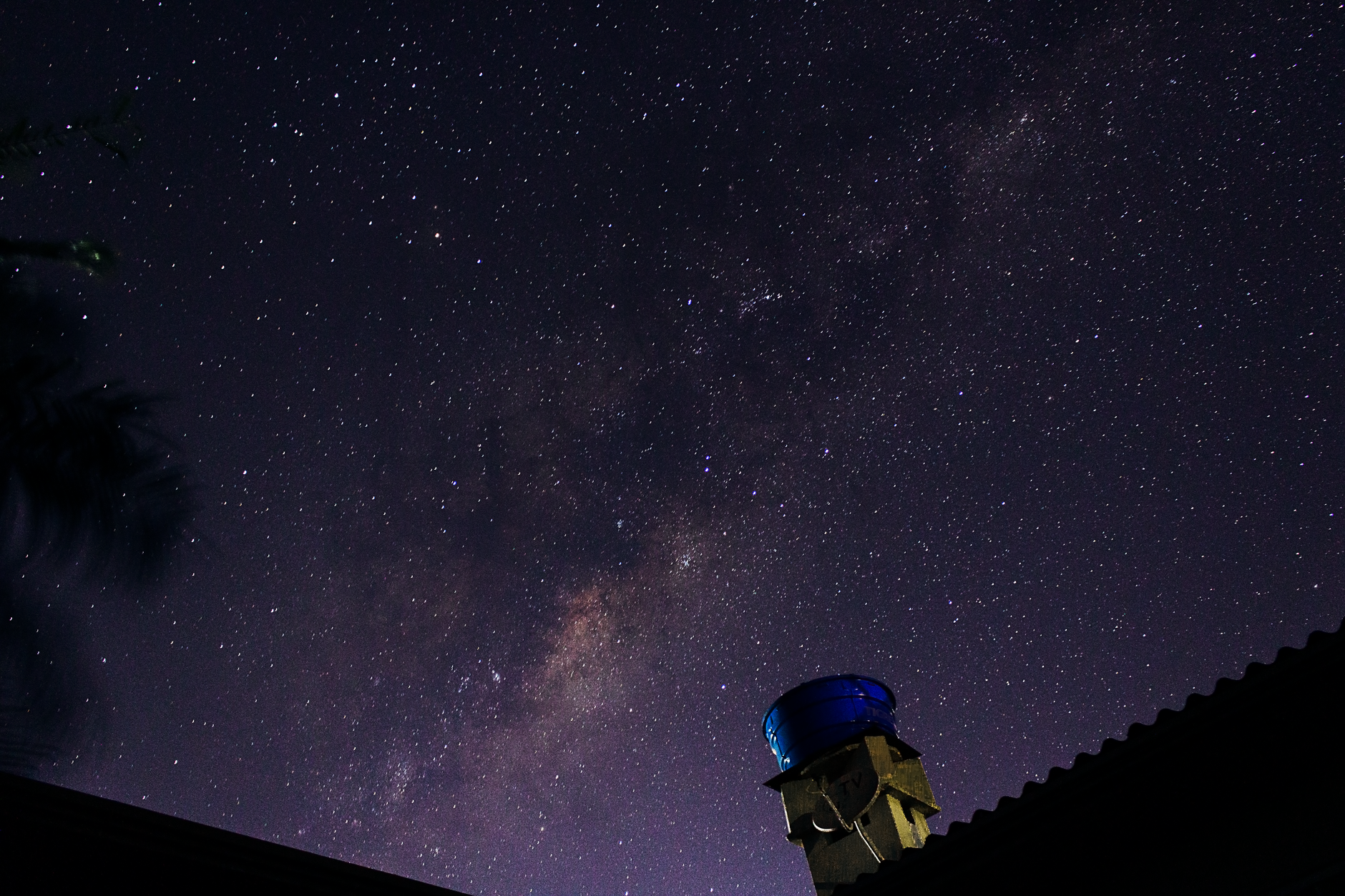
An elevated tank tower is the most flexible gravity setup because it does not care where your water comes from. Haul it, pump it, or catch it, then let the tank sit 25 to 40 feet up and feed the house downhill. A 40-foot tower puts roughly 17 psi at the kitchen tap, which runs a shower, a toilet, and a sink without complaint.
Norwesco’s 1,550-gallon vertical poly tank is the workhorse most builders reach for. Check the Norwesco 1,550-gallon vertical tank on Amazon. It holds about two weeks of water for a family of four at 100 gallons per day and is rated for potable use out of the box. Pair it with a 1-inch distribution line and you can move 8 to 10 gallons per minute to the house at full head.
The catch is pressure. Towers get expensive to build past 40 feet, and 17 psi will not run a pressure washer or a sprinkler. Most people add a small booster pump and pressure tank at the house, which defeats half the point of going gravity. Set expectations at 10 to 20 psi and you will be happy with the results.
Cold weather is the other weak spot. An exposed poly tank freezes into a 1,550-gallon ice cube, and the line running out of it is the first thing to split. Insulate the tank, bury the line below the frost line, and winterize the entire system before the first hard freeze. Algae is a summer problem in translucent tanks, so pick an opaque model or wrap the tank in a shade cloth.
Key strengths:
- ✅ Works on flat land where no natural elevation exists
- ✅ Doubles as emergency water storage in any outage
- ✅ No electricity needed in the distribution line at all
- ✅ Poly tanks are inexpensive, repairable, and easy to replace
- ✅ Simple plumbing with no moving parts below the tank
- ❌ Realistic pressure tops out near 17 psi at a 40-foot tower
- ❌ Tall towers need concrete footings, guy wires, and inspection
- ❌ Exposed tanks grow algae and freeze solid in cold climates
Who it’s for: Choose this setup if your property is flat, your source is inconsistent, and you want storage that doubles as your pressure source.
2. Natural Spring Gravity Feed , Best for hillside properties with a live spring
A spring box is the cheapest water system on this list once you own the land. You dig a collection box at the spring eye, seal the lid, and run a line downhill to the house. Gravity handles the rest. No pump, no power, no controller to burn out in a thunderstorm. A spring sitting 100 feet above the cabin gives you 43 psi at the tap, which is better than plenty of municipal systems manage.
Capacity is rarely the problem. A typical hillside spring produces 1 to 10 gallons per minute, or roughly 1,400 to 14,000 gallons per day. That is far more than a household can use. Summer is the problem. A spring that roars in April can trickle by September, so you still want a buffer tank. A 500-gallon storage tank between the spring box and the house smooths out the dry weeks and gives you water when the line ices up or silts in.
Protect the source before you trust it. Spring water is surface water until proven otherwise, and animals, runoff, and shallow groundwater all reach a box that is not sealed, fenced, and sloped for drainage. Test the source at least twice a year, once in wet season and once in dry. Treat it if the results are questionable.
The plumbing is unforgiving on steep ground. Air locks, freezing, and erosion all attack a long spring line, and you need a cleanout at every low point and a shutoff at the box. Bury the pipe deep, or run it in a sleeve where it crosses a drainage.
Key strengths:
- ✅ Zero energy cost once the line is installed
- ✅ Best pressure per dollar of any gravity setup available
- ✅ Spring water is often naturally filtered through soil and rock
- ✅ No pump, controller, battery, or panel to maintain
- ✅ Often buildable for the cost of pipe and a small concrete box
- ❌ Requires real elevation change between source and house
- ❌ Spring flow drops in late summer and can stop entirely
- ❌ Surface contamination risk makes testing and treatment mandatory
Who it’s for: Choose this setup if you own a sloped property with a live spring above the building site and want water with no energy input at all.
3. Rainwater Cistern Gravity System , Best for roof capture and dry-season reserves
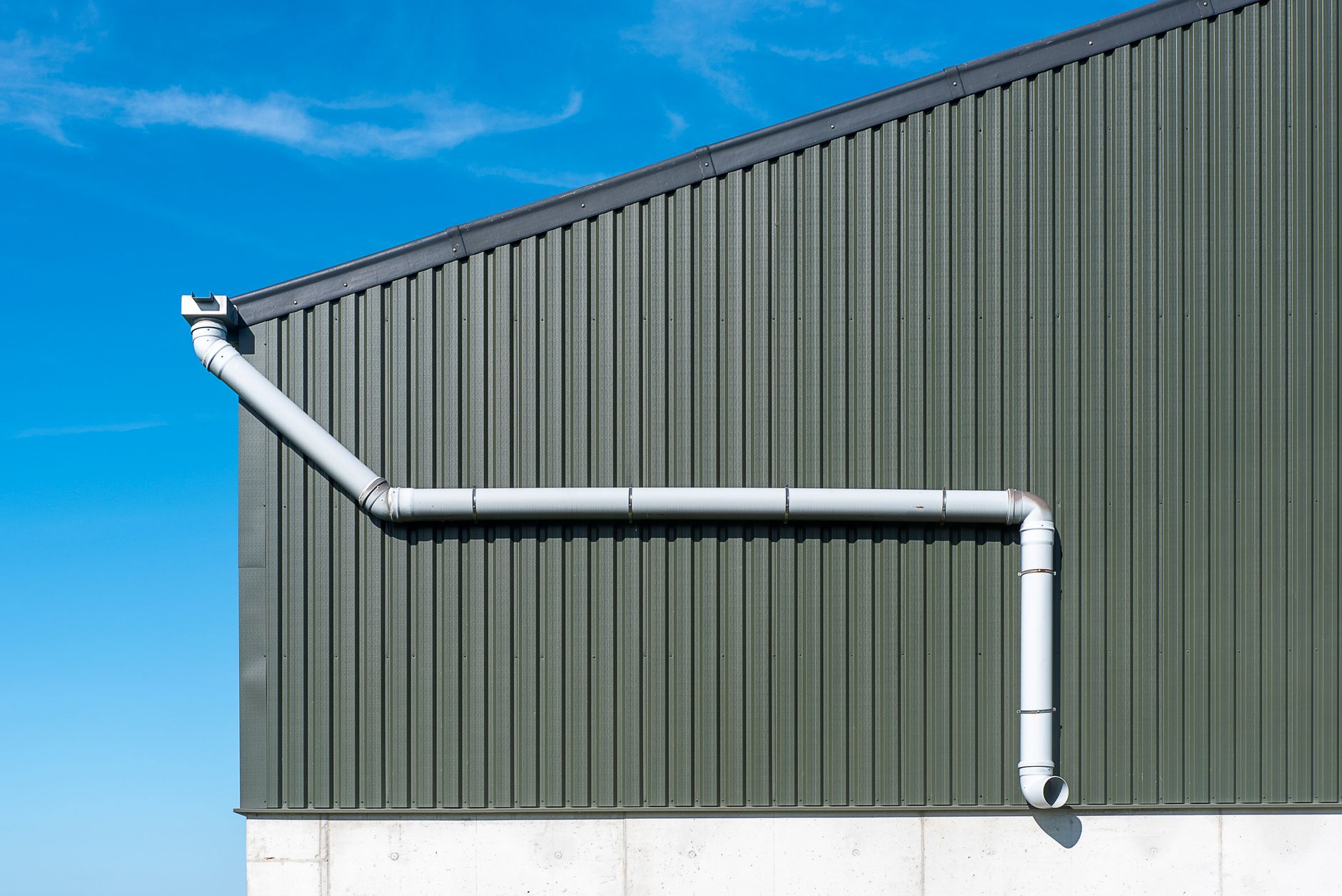
Your roof is already a collection surface, which makes rainwater the least invasive gravity source on this list. Gutters feed a cistern, the cistern sits uphill of the house or on a pad, and gravity moves the water to the fixtures. A 1,000-square-foot roof sheds about 600 gallons for every inch of rain, so a single decent storm can refill a mid-size tank.
Cisterns scale from a few hundred gallons to several thousand, and they are the easiest piece of this system to expand later. Start with what you can afford, add a second tank, and connect them at the bottom with a balance line. Keep the tank level, mosquito-proof the lid, and screen every inlet. If you are building from scratch, our rainwater harvesting guide walks through sizing, first flush, and gutter layout in detail.
The water quality is the honest downside. Roof runoff carries bird droppings, asphalt grit, pine needles, and whatever the wind deposits. Copper and zinc from flashing and shingles show up in the first flush. Install a first flush diverter, a pre-filter screen, and a sediment cartridge before the water ever reaches the tank.
For drinking, polish the water at the tap. A gravity filter such as the Sawyer PointOne rigged as a drip system removes bacteria and protozoa without needing line pressure. Check the Sawyer PointOne gravity filter on Amazon. Change cartridges on a schedule and re-test after any roof repair or gutter replacement.
Key strengths:
- ✅ Roofs already exist, so the collection area costs nothing extra
- ✅ Cisterns scale easily from a few hundred to several thousand gallons
- ✅ Gravity feed keeps working through grid outages
- ✅ Simple add-ons like first flush diverters cut contamination
- ✅ Rainwater is naturally soft and low in dissolved minerals
- ❌ Roof runoff carries bird droppings, grit, and metals
- ❌ Supply depends entirely on rainfall in your area
- ❌ Large cisterns need level pads, screened lids, and real maintenance
Who it’s for: Choose this setup if you have a decent roof footprint, moderate rainfall, and want storage you can build out one tank at a time.
4. Creek or Pond Gravity Intake , Best for high-volume surface water with heavy filtration
If a creek or pond sits uphill of your building site, you have the largest potential water supply of any setup here. A screened intake in a pool or riffle feeds a settling tank, then a gravity line runs down to a storage tank and on to the house. Runs of 200 to 1,000 gallons per day are realistic when the water flows year round.
The treatment burden is the highest on this list. Surface water carries sediment, leaves, agricultural runoff, Giardia, Cryptosporidium, and bacteria. A settling tank knocks down the grit, a 5-micron sediment filter catches the rest, and then you need disinfection. Ceramic filters, carbon block cartridges, and UV units all work, but low gravity pressure limits which models you can run. Look for filtration certified to NSF/ANSI standards through the Water Quality Association before you install anything in a drinking water line.
Turbidity is the operational headache. After a hard rain, a creek can go from clear to chocolate in an hour, and that mud clogs filters fast. Build a settling tank big enough to hold a day of water, and add a valved bypass so you are not pushing storm water through your cartridges.
Permits matter here more than anywhere else. Diverting surface water is regulated in most states, and the rules vary from county to county. Sort out the paperwork before you trench.
Key strengths:
- ✅ Nearly unlimited volume if the creek runs year round
- ✅ Cheap intake hardware compared to drilling a well
- ✅ Works well on steep ground with a long gravity line
- ✅ Storage buffer smooths out turbidity spikes and dry weeks
- ✅ Can also serve livestock and irrigation from the same line
- ❌ Highest treatment burden of any setup here
- ❌ Turbidity clogs filters fast after every storm
- ❌ Low gravity pressure rules out some UV and RO equipment
Who it’s for: Choose this setup if you have a reliable surface water source above the house and are willing to build and maintain real filtration.
5. Solar Pump to Elevated Storage , Best for drilled wells and low-yield sources
This is the hybrid approach that gets gravity distribution even when your water sits 200 feet underground. A DC solar pump lifts water from the well into an elevated tank during the day, and gravity feeds the house around the clock. No batteries required in most configurations, because the tank itself is your storage.
The Grundfos SQFlex is the pump most off-grid installers reach for. Check the Grundfos SQFlex solar pump on Amazon. It runs directly off a solar array, handles lifts of 100 to 400 feet, and slows down rather than shutting off when clouds roll in. A 300-watt array pushing from 150 feet typically produces several hundred gallons on a clear day, and closer to a thousand gallons if your static water level is shallow.
The cost is the honest downside. Panels, a controller, a pump, wiring, and a 1,500-gallon tank add up fast, and none of it is optional. Controllers and pump motors do fail, and replacing a submersible means pulling the drop pipe. Budget for that maintenance before you commit.
Well construction standards matter too. A poorly cased well lets surface water and sediment into the pump, which shortens its life and complicates treatment. The National Ground Water Association publishes contractor standards worth checking before you hire a driller. If you are still choosing equipment, our roundup of solar water pumps covers the models that hold up in cold climates.
Key strengths:
- ✅ Reaches water 100 to 400 feet down where gravity alone cannot
- ✅ Runs directly off solar panels with no battery bank in most setups
- ✅ Fills storage by day and lets gravity distribute all night
- ✅ Handles low-yield wells by pumping slowly over many hours
- ✅ One pump can serve household, livestock, and irrigation
- ❌ Highest upfront cost of the five setups compared here
- ❌ Pump controllers, panels, and wiring add failure points
- ❌ Multi-day cloud cover cuts daily output significantly
Who it’s for: Choose this setup if you rely on a drilled well with a deep static water level and still want gravity-fed distribution without a generator.
Frequently Asked Questions
How much pressure does a gravity fed water system produce?
Every 2.31 feet of vertical drop between the tank surface and the faucet gives you 1 psi. A 30-foot drop produces 13 psi, and a 100-foot drop produces 43 psi. Most households want 30 to 50 psi at the fixtures, which means 70 to 115 feet of elevation or a booster pump.
Do I need a pump on a gravity water system?
Not for distribution. Gravity moves the water from storage to the taps on its own. You still need a way to fill the tank, which might be a hand pump, a solar pump, a ram pump, or a gravity line running down from a spring above the house.
How much water storage should an off-grid home have?
Plan on 100 gallons per day for a family of four and store 10 to 14 days of it. That works out to roughly 1,000 to 1,550 gallons of tank capacity. More storage smooths out dry spells, breakdowns, and heavy use days.
Can I drink untreated spring or creek water from a gravity line?
No. Spring and creek water is surface water and can carry Giardia, Cryptosporidium, E. coli, and agricultural runoff. Test the source and treat the water with a ceramic filter, UV unit, or boil. Grazing animals uphill of your intake is an automatic treatment requirement.
What size pipe should I run for a gravity water line?
Use 1-inch poly pipe or larger for runs over 100 feet, and 3/4-inch for short runs under 50 feet. Undersized pipe creates friction loss that eats your pressure, especially at low gravity pressures where every psi counts.
How do I keep a gravity water system from freezing?
Bury the distribution line below the frost line, insulate and shade the storage tank, and install a drain valve at the lowest point. Poly tanks left exposed will freeze solid, and the first hard freeze usually splits the outlet fitting before the tank itself.
What Should You Remember?
- Elevation equals pressure: every 2.31 feet of drop gives 1 psi, so a 100-foot fall from tank to tap matches city water pressure.
- Storage beats source size: a 1,550-gallon tank covers a family of four for about two weeks at 100 gallons per day.
- Springs are the cheapest pressure: a hillside spring box delivers 43 psi at 100 feet of drop with no pump and no power.
- Towers top out low: a 40-foot tank tower gives only about 17 psi, so most builders add a booster pump at the house.
- Treatment is not optional: the EPA sets maximum contaminant levels for more than 90 substances, and those limits apply to your spring or creek too.
- Solar pumps extend gravity to wells: a DC pump can lift water 100 to 400 feet into elevated storage without batteries.
- Filtration must match low pressure: ceramic and carbon block filters work at low psi, while some UV and reverse osmosis units do not.
This article is for general information only. Water purification and storage carry health and safety risks , always follow local regulations and manufacturer guidance.