You cannot manage what you do not measure, and water hardness is no exception. Before you buy a softener, a conditioner, or even a stronger detergent, you should know your actual number. The good news is that testing hardness is one of the easiest water tests you can do yourself. You do not need a lab, you do not need to wait a week, and you do not need to spend more than twenty bucks for a solid answer. This guide covers every method, from a free kitchen experiment to a certified lab panel, so you can pick the one that matches how precise you need to be.
Why bother testing at all? Because hardness varies enormously, even block to block, and guessing wrong is expensive. A softener sized for 20 GPG when your water is actually 8 GPG is a waste of money and salt. A water heater that dies early because you never treated 18 GPG water costs more than the test ever would. The USGS classifies hardness in grains per gallon, with 1 to 3.5 GPG slightly hard and anything over 10.5 GPG very hard. Knowing where you fall tells you everything else. For background on what hardness is and how it behaves in your home, start with our hard water vs soft water explainer.
Each method below trades speed and cost against accuracy. Here is how they compare, then I will walk through each one in detail.
| Method | Cost | Time | Accuracy | Best For |
|---|---|---|---|---|
| Soap shake test | Free | 1 min | Low (rough estimate) | Quick sense check |
| Test strips | Check price | 1 min | Good | Most homeowners |
| Digital TDS meter | Check price | 5 sec | Fair (indirect) | Ongoing monitoring |
| Liquid titration kit | Check price | 10 min | Very good | Precise DIY number |
| Certified lab test | Check price | 3–7 days | Excellent | Exact + full panel |
What You’ll Need
- Clear bottle with a lid
- Pure liquid dish soap (not detergent with additives)
- Hardness test strips or a titration kit
- Optional: digital TDS meter
- Tap water from the source you want to test
How Do You Test Water Hardness at Home?
- Decide What Accuracy You Actually Need
Think about why you are testing. If you just want to know whether your water is “hard” or “soft” so you can pick the right laundry detergent, a free soap test or a cheap strip is more than enough. If you are about to spend $1,500 on a water softener and need to size it correctly, you want a precise number, which means a titration kit or a lab test. If you are on a private well and also want to know about iron, bacteria, or nitrates, hardness is only one line on a full lab panel, so go straight to the lab. Matching the method to the decision saves you either money or accuracy, never both.
- Run the Free Soap Shake Test First
This test costs nothing and takes a minute. Fill a clear bottle about a third full with cold tap water. Add ten or so drops of pure liquid soap, the kind with no added detergents or softeners. Cap it and shake it hard for 15 seconds. Now look at the result. If a thick layer of foam forms immediately and the water below stays clear, your water is soft. If the foam is thin, milky, and short-lived, and the water looks cloudy, you have meaningful hardness. The harder the water, the more the calcium and magnesium bind up the soap before it can lather, leaving that flat, scummy result. This is a qualitative test only, so it tells you “hard” or “soft,” but it will not give you a number.
- Use a Color-Changing Test Strip for a Real Number
Test strips are the sweet spot for most people. A good kit, like the ones in our best water testing kits roundup, costs between $10 and $20 and usually includes strips for hardness, pH, chlorine, and sometimes total dissolved solids. A widely available option is the JNW Direct 17-in-1 water test kit, which covers hardness plus most common contaminants in one dip. To use a strip, dip it in a glass of water for the time listed on the package, usually one to three seconds. Pull it out, hold it level, and wait the specified time, often 15 to 30 seconds. Compare the color of the hardness pad against the chart on the bottle. You will get a reading in GPG or mg/L.
Strip tests are accurate enough for nearly every home decision, but they have two limits. First, they expire, so check the date and buy from a seller with fresh stock. Second, the color comparison is subjective, so two people might read the same strip one shade apart. That one-shade difference rarely changes your decision, though. If your strip reads 2 GPG, you do not need a softener. If it reads 18, you clearly do. The exact cutoff in the middle is where a more precise method helps.
- Use a Titration Kit for Lab-Grade Precision at Home
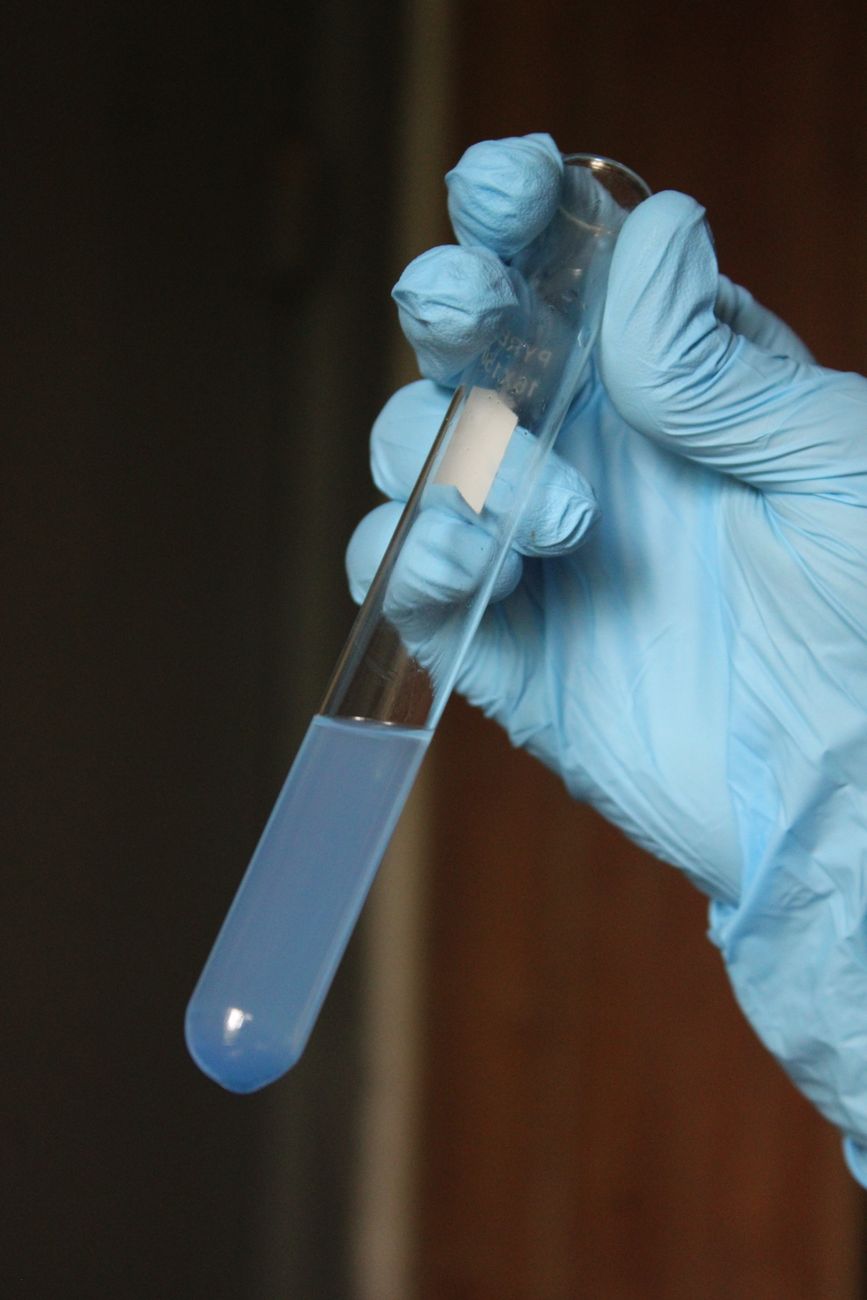
For a precise, repeatable number without leaving your kitchen, a drop-count titration kit is the best value. These kits cost a little more than strips, around $15 to $40, but they remove the guesswork of matching colors. You fill a sample vial with exactly the amount of water the instructions specify, add a reagent drop by drop, and count how many drops it takes for the water to change color. Each drop corresponds to a grain of hardness. If it takes nine drops to change the water from pink to blue, your water is 9 GPG.
Titration is the same method a professional lab uses, just simplified for home use. It is more involved than a strip and takes about ten minutes, but it gives you a single, unambiguous number rather than a color range. If you are sizing a softener, this is the minimum precision I would trust, because softener sizing depends directly on your hardness in grains per gallon. Measure it once with a titration kit and you can size your equipment with confidence.
- Understand What a TDS Meter Does and Does Not Tell You
A digital TDS meter is cheap, fast, and everywhere, which makes it tempting. It measures total dissolved solids in parts per million by passing an electrical current through the water. Here is the catch: TDS includes hardness minerals, but it also includes everything else that is dissolved, from sodium to chloride to trace organics. A reading of 350 ppm does not tell you whether 300 of those ppm are calcium or whether it is mostly dissolved salts. Hardness is only one slice of TDS.
That said, TDS meters are still useful for one thing: tracking changes over time. If you install a softener and watch your TDS barely move, you learned that most of your dissolved solids were not hardness. If your TDS tracks up month over month on a well, something is shifting in your aquifer. Just do not mistake a TDS reading for a hardness number. For actual grains per gallon, use a strip or a titration kit. For a full discussion of what dissolves in your water, our guide to reading a water quality report covers the breakdown.
- Check Your City’s Water Report Before Testing

If you are on a municipal supply, start free. Every public water system in the United States must publish an annual Consumer Confidence Report, and you can look up yours on the EPA’s CCR page or your utility’s website. Hardness is not a regulated contaminant, so it is not always listed, but many cities include it as a service to residents. If yours does, you now have a free, professionally measured baseline for your whole service area.
Two cautions. First, the report is a system-wide average, and hardness at your specific tap can differ if your neighborhood is fed by a different blending station. Second, the report only helps municipal customers. A private well has no report and no utility, so well testing is entirely on you. If the report gives you a number, use it as a starting point, then confirm with a cheap strip at your own tap if it matters for a purchase decision.
- Send a Sample to a Certified Lab for the Final Word
When the stakes are real, a certified lab is worth the money and the week. You can order a lab test through state-certified labs or via a service like the kits we recommend in the water quality report guide. The lab will send you clean sample bottles, you follow a specific collection procedure, and a few days later you get a certified result. Alongside hardness, a full panel usually covers bacteria, nitrates, iron, manganese, pH, and heavy metals.
A lab test is the right call in three situations. First, if you are buying or selling a home and want a documented water profile. Second, if you suspect your well has changed, after flooding, new construction, or a change in taste or smell. Third, if you have high hardness plus occasional rusty or metallic water, since that suggests iron, and iron changes how you choose between a softener and a conditioner. For pure hardness alone, a titration kit is plenty. For peace of mind across the whole water profile, a lab is unbeatable.
Red Flags & Warnings
- 🚨 Do not buy a softener based on a TDS meter reading alone. It does not separate hardness from other dissolved solids and will mislead you.
- 🚨 Check test strip expiration dates. Expired strips give false readings, usually reading softer than reality.
- 🚨 If you have high hardness plus rust stains, test for iron too. Iron is a separate contaminant that needs its own treatment, not just softening.
- 🚨 A free city report is an average, not your tap. Confirm with a strip before spending real money on equipment.
Frequently Asked Questions
How can I test water hardness for free?
Use the soap shake test. Add pure liquid soap to a clear bottle of tap water, shake hard, and watch the foam. Thick, long-lasting foam means soft water, while thin, milky foam that flattens quickly means hard water. This is qualitative only, not a number.
What is a good water hardness level?
Under 1 GPG is soft and ideal for lathering and appliances. Between 1 and 3.5 GPG is slightly hard and usually fine untreated. Above 7 GPG, most homeowners benefit from softening. There is no health reason to hit a specific number, only comfort and appliance-longevity reasons.
Are home water hardness test kits accurate?
Yes, for household decisions. Fresh test strips are accurate to within a grain or two, which is plenty for deciding whether to soften and what size softener to buy. For a precise, repeatable number, a titration kit is more accurate than strips.
Does a TDS meter measure water hardness?
No. A TDS meter measures all dissolved solids, not just calcium and magnesium. It cannot tell hardness apart from sodium, chloride, or other dissolved material, so it will not give you a hardness number. Use it for tracking changes, not for hardness.
How often should I test my water hardness?
On a municipal supply, once at your tap is enough unless the utility changes its source. On a private well, test hardness annually, and re-test after heavy rain, drilling, or any change in taste or appearance, since well water chemistry can shift over time.
Can I test hardness with just vinegar?
Not meaningfully. Vinegar dissolves existing scale, which is a descaling trick, but it does not measure how much calcium and magnesium are dissolved in your water. Use a test strip or titration kit for an actual hardness reading.
What Should You Remember?
- Match the method to the decision, a soap test confirms “hard vs soft,” while a titration kit gives the exact GPG you need to size a softener.
- The soap shake test is free and tells you qualitatively whether you have hard water in under a minute.
- Test strips are the best value for most homeowners, fast, cheap, and accurate enough to guide equipment decisions.
- A TDS meter is not a hardness test, it measures all dissolved solids and will mislead you if you read it as grains per gallon.
- Check your city’s Consumer Confidence Report for a free baseline, but remember it is an average, not your specific tap.
- Use a certified lab for the final word, especially on a well or when buying a home, and test for iron alongside hardness.
- Know your number before you buy, guessing wrong on hardness leads to a mis-sized, wasteful softener.
This article is for general information only. Water purification and storage carry health and safety risks — always follow local regulations and manufacturer guidance.