Every year, millions of Americans receive a water quality report from their community water system. This document, also called a Consumer Confidence Report (CCR), tells you exactly what is in your drinking water. For off-grid homeowners and those who rely on private wells, no such report arrives automatically. Understanding what these reports contain and how to interpret the numbers puts you in control of your water safety. Whether you draw from a municipal supply or a personal well, learning to read a water quality report is a foundational skill for protecting your family’s health.
The EPA requires community water systems to disclose detected contaminants and compare them to legal limits called Maximum Contaminant Levels (MCLs). Over 90 contaminants are regulated, yet many private wells serving more than 40 million people receive no oversight. Even in regulated systems, violations occur. The CDC notes that about 7% of community water systems reported at least one health-based violation in a recent year. Knowing how to parse your report lets you spot issues early and decide if extra filtration or an alternative water source is necessary.
This article walks you through the anatomy of a water quality report. You will learn where to find your report, how to decipher the contaminant table, what terms like MCL, MCLG, and Action Level mean, and what to do if a contaminant exceeds safe limits. We will touch on standards from the CDC and WHO to give you a broader perspective. By the end, you will feel confident evaluating any water quality data, whether from a city report or a home test kit.
| Contaminant | MCL (mg/L unless noted) | Typical Source | Health Risk |
|---|---|---|---|
| Nitrate | 10 mg/L (as N) | Fertilizers, septic systems, animal waste | Blue baby syndrome; reduced oxygen in blood |
| Arsenic | 0.010 mg/L | Natural deposits, industrial runoff | Cancer, skin damage, circulatory problems |
| Lead | Action Level 0.015 mg/L (15 ppb) | Plumbing corrosion, old pipes | Developmental delays, kidney disease |
| Total Coliform Bacteria | 0 (no more than 5% positive) | Fecal contamination | Gastrointestinal illness |
| TTHMs (Total Trihalomethanes) | 0.080 mg/L | Chlorination byproducts | Cancer, liver and kidney problems |
| Atrazine | 0.003 mg/L | Agricultural herbicide runoff | Cardiovascular and reproductive issues |
What Is a Water Quality Report and Why Should You Care?

A water quality report is an annual summary that public water systems must provide to customers. It details the source of your water, any contaminants detected during testing, and how those levels compare to EPA standards. For the 90% of Americans served by community water systems, this report is a legal right. It is often mailed to your home or available online by July 1 each year. If you rely on a private well, you will not receive a report. Instead, you must arrange your own testing. Taking the time to understand this document allows you to spot potential health threats, track changes over time, and decide whether a water testing kit or a follow-up lab analysis is warranted. More than 40 million people in the U.S. depend on private wells that are not regulated by the Safe Drinking Water Act, making self-education critical.
The report is not just a formality. It empowers you to ask the right questions. For example, you might notice that nitrate levels have been creeping upward in your agricultural area. Or that lead levels, while below the action level, are still detectable. The EPA sets legal limits, but sensitive groups like pregnant women, infants, and those with compromised immune systems may need even cleaner water. Reading your report helps you recognize when to install an under-sink filter or seek a more powerful whole-house system.
- Water source: reservoir, river, groundwater, or purchased water
- Detected contaminants and the highest level found
- Range of detections throughout the sampling period
- MCL (legal limit) and MCLG (health goal) for each contaminant
- Violations (Yes or No) if the MCL was exceeded
- Likely source of the contaminant (e.g., natural deposits, agriculture, plumbing)
Where Do I Find My Water Quality Report?

If your water comes from a community system, start with your utilitys website. A simple search for “[your water system name] water quality report” often pulls up the latest PDF. Many utilities also post past reports so you can compare year-over-year data. The EPAs Safe Drinking Water Information System (SDWIS) at the EPA website allows you to search by state and system name. If you rent or live in a multi-unit building, ask your landlord or property manager for the report. According to recent data, about 90% of community water systems meet all health-based standards. Yet for the 10% that do not, the report is your first warning.
Private well owners face a different reality. There is no mandated report and no regulatory oversight. The only way to know what is in your water is to test it yourself. Use a certified lab kit or a reliable home testing kit to check for the most common well contaminants: bacteria, nitrate, and arsenic. If you collect rainwater, you should also test it regularly. In all cases, treat your own water quality report as a living document. When you install a new well or change your rainwater collection system, test again. Knowing how to find and generate a report is the first step toward safe, off-grid water independence.
How Do I Read the Contaminant Table in My Report?

The heart of any water quality report is the contaminant table. It typically lists each detected substance in a row with columns for the detected level, unit, MCL, MCLG, and whether a violation occurred. Begin by scanning the Violation column. A “Yes” means the level exceeded the legal MCL at some point during the reporting period. For example, if nitrate appears with a detected level of 12 mg/L and the MCL is 10 mg/L, that is a violation. The unit matters: mg/L (milligrams per liter) is equivalent to parts per million (ppm), and µg/L (micrograms per liter) is equivalent to parts per billion (ppb). Do not confuse them. A level of 0.005 mg/L of arsenic is the same as 5 ppb, well below the MCL of 10 ppb.
Some contaminants, like lead and copper, use an Action Level (AL) rather than an MCL. The AL is the concentration that triggers treatment or other requirements if exceeded in more than 10% of sampled taps. The CDC points out that there is no safe level of lead in blood, so even a result under the 15 ppb action level can concern parents. For private well users, you must compare your lab results against the same EPA standards. When you see “ND” (Not Detected), it means the contaminant was not found above the laboratorys detection limit. Understanding these columns transforms a jumble of numbers into actionable health information.
- MCL - Maximum Contaminant Level (enforceable legal limit)
- MCLG - Maximum Contaminant Level Goal (health-based, not enforceable)
- AL - Action Level (triggers treatment for lead/copper)
- LRAA - Locational Running Annual Average (for disinfection byproducts)
- TT - Treatment Technique (required process instead of a numeric limit)
- ND - Not Detected
What Are MCLs, MCLGs, and Action Levels?
The difference between an MCL and an MCLG is crucial. An MCL is the highest level of a contaminant allowed in drinking water. It is set as close as feasible to the MCLG, considering available technology and costs. For many carcinogens, the MCLG is zero, because no amount is considered safe. Arsenic provides a clear example: its MCLG is 0 mg/L, but the enforceable MCL is 0.010 mg/L. The EPA estimates that lowering the arsenic standard from 50 ppb to 10 ppb in 2006 prevents more than 300 cancer cases annually. Even so, water with 8 ppb of arsenic meets the legal limit, yet you might still want to filter it to approach the health goal.
Action Levels are distinctive. Used only for lead and copper, they are not set at the MCL but instead indicate when systems must install corrosion control treatment. If more than 10% of sampled homes exceed 15 ppb for lead or 1.3 ppm for copper, the water system must take action. The WHO offers even stricter guidelines often lower than U.S. limits. For off-grid living, understanding these definitions helps you select the right filtration strategy. When you read your report, focus on whether the detected level violates an MCL or approaches an Action Level. If it does, immediate steps like emergency water storage may be needed while you install a long-term solution.
- MCL: Legally enforceable limit, set as close to MCLG as feasible
- MCLG: Health goal below which no known adverse health effects occur
- Action Level: Concentration for lead or copper requiring system treatment
- Treatment Technique: Required process when a numeric limit is not practical
What Common Contaminants Should I Watch For?
Contaminants fall into several categories. Microbial threats like coliform bacteria and E. coli indicate fecal contamination and are the most common acute risk for well water. Inorganic chemicals such as nitrate, arsenic, and lead often stem from agricultural runoff, natural deposits, or plumbing corrosion. Disinfection byproducts (TTHMs, HAA5) form when chlorine reacts with organic matter and are monitored in public supplies. Radionuclides and volatile organic compounds also appear in certain regions. For private wells, start with bacteria and nitrate tests, then expand based on local geology. A well drilling guide can help you understand how well depth and construction influence contamination risk.
Lead is a special concern even in city water. While your water supplier may deliver water with no lead, it can leach from home pipes and solder. The CDC reports that no safe level of lead exists, particularly for children. If your report shows a lead 90th percentile value of 12 ppb, you are under the action level but should still consider a point-of-use filter certified for lead removal. For a complete picture, compare your report to the table below and decide whether a whole-house system or dedicated emergency storage fits your needs. Regularly testing your water ensures you catch changes early.
What Should I Do If My Report Shows a Violation?
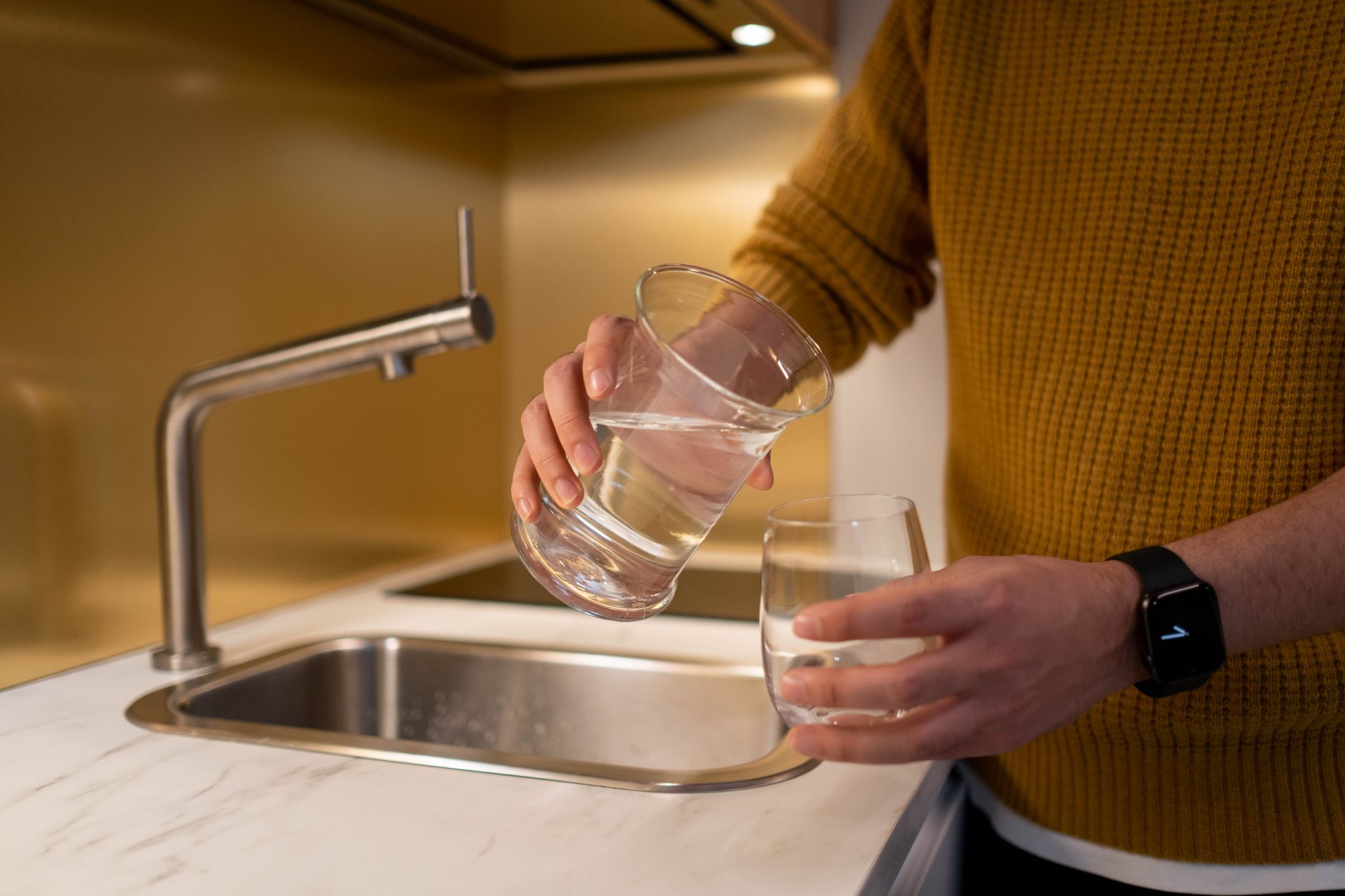
First, do not panic. Read the violation notice carefully. For microbial contaminants, the utility will issue a boil-water advisory. Follow it strictly. For chemical exceedances, ask your water system what they are doing to correct the problem. If you are on a private well and your test results exceed an MCL, you must act on your own. Begin by confirming the result with a second test. If the violation stands, stop using the water for drinking and cooking until you install treatment. Keep emergency water storage on hand for such situations.
For lead violations, simple steps like flushing cold water for two minutes before use and never using hot tap water for cooking reduce exposure. However, a certified filter is the most reliable fix. Look for products bearing the WQA or NSF mark. If the violation involves nitrate, boiling does not help; it concentrates the contaminant. In that case, reverse osmosis or distillation systems are effective. For long-term peace of mind, consider upgrading to a whole-house filtration setup or switching to a managed off-grid system. Always document your actions and retest after treatment is installed.
- Verify the violation with a second test or contact your utility
- Follow any boil-water or do-not-drink orders immediately
- Use bottled water or a certified emergency filter until resolved
- Install a point-of-use or whole-house filter certified for the specific contaminant
- Retest your water after installing treatment to ensure effectiveness
Frequently Asked Questions
How often should I test my private well water?
Test annually for coliform bacteria, nitrate, and any local contaminants. After flooding or land-use changes, test more often.
Is a water quality report available for private wells?
No. Private well owners are responsible for testing their own water and comparing results to EPA MCLs as guidelines.
What does it mean if my water has “ND” next to a contaminant?
ND stands for not detected, meaning the contaminant was below the laboratorys detection limit.
Can I drink water if the contaminant level is under the MCL but above the MCLG?
The water meets federal safety standards for the general population. However, individuals with weakened immune systems, pregnant women, or young children may want to use additional treatment.
Do showering and bathing pose risks if my water has a violation?
For most chemical contaminants, showering is safe because skin absorption is minimal. For volatile organic compounds (VOCs), consider a whole-house filter. Always follow utility guidance.
Where can I find certified water treatment products?
Products certified by the Water Quality Association (WQA) or NSF International are independently tested. Look for the certification mark on filter packaging.
What Should You Remember?
- Your water quality report shows detected contaminants and compares them to legal MCLs. Understand what the numbers mean.
- MCLs are enforceable limits, while MCLGs represent health goals. Action Levels, like for lead, indicate when treatment is required.
- Private well owners receive no automatic report. You must test your water at least once a year.
- If a contaminant exceeds the MCL, do not ignore it. Contact your water utility or, for wells, treat with certified filtration.
- Even low-level detections can pose risks for vulnerable groups. Consider additional point-of-use filters.
- Read the fine print. Units matter - compare mg/L, ppb, and look for violations marked clearly.
- Emergency preparedness means having a plan. Keep emergency water storage handy in case of serious violations.
This article is for general information only. Water purification and storage carry health and safety risks — always follow local regulations and manufacturer guidance.