An on demand water pump does one simple thing well: it runs when you open a tap and stops when you close it. No tank in the corner holding a fixed drawdown, no pump hammering on at 3 a.m. to top off a bladder, no 20 psi swing between the shower starting and the toilet flushing. For anyone building a cabin, replacing a tired well system, or fighting pathetic municipal pressure, that behavior is the entire appeal. The trick is that on demand describes a control strategy rather than a single product. A 12V diaphragm pump in an RV, a variable-speed booster under a utility sink, and a 3-inch submersible 200 feet down a well can all call themselves on demand pumps. They solve completely different problems. Buying the wrong one wastes money and leaves you with worse pressure than you started with. This comparison covers six proven options across that whole range, from a bargain cabin pump to a full constant-pressure well system.
Sizing comes down to two numbers and one measurement. The numbers are GPM and PSI. The measurement is how far the water travels and how far it has to be lifted. A single shower head runs about 2.5 GPM under federal standards, a kitchen faucet about 2.2 GPM, and a washing machine can pull 5 GPM or more during fill. Add up the fixtures you might run at once and you have peak demand. Then work out the pressure. Every 2.31 feet of vertical rise eats one psi, so a cabin 30 feet uphill from the pump loses roughly 13 psi before water even reaches the faucet. Pressure switches cover the other half of the equation. Standard well switches ship set at 30/50 psi or 40/60 psi, and that 20 psi spread is exactly what constant-pressure pumps exist to eliminate. Before buying anything, read our well drilling guide to learn what your existing well can actually deliver.
Off-grid setups change the math again, because now the pump has to fit your power budget. A 1/2 HP AC pump pulls around 900 to 1,000 watts while running and can surge far higher for a second at startup. That surge is what forces people into oversized inverters and generators. DC diaphragm pumps draw roughly 5 to 10 amps at 12 volts, which a modest battery bank handles without complaint. Solar submersibles sit in between and run straight off an array with no battery at all. If you are building from scratch, our off-grid water systems walkthrough covers how pumps, tanks, and power sources fit together, and the best solar water pumps comparison digs into panel-matched models. The short version: match the pump to your power source first, then match it to your well.
We compared these six pumps on flow at realistic pressure, current draw, behavior when a well runs dry, and how much maintenance they need over ten years. Manufacturer flow ratings are measured at low head, so treat every published GPM figure as a ceiling rather than a promise. Water quality matters here too. The EPA’s drinking water standards set maximum contaminant levels for more than 90 substances, but private wells fall outside those rules. That part is on you. The CDC’s drinking water guidance recommends testing private well water at least once a year for bacteria, nitrates, and whatever local geology puts in the ground. Arsenic, for example, has a federal limit of 10 parts per billion, and it turns up in wells across the Southwest and New England. A pump moves water. It does not clean it.
How Do the Top Options Compare?
| Pump | Best For | Type | Typical Flow | Power | Check Price |
|---|---|---|---|---|---|
| Grundfos Scala2 | Whole-house constant pressure | Variable-speed booster | 8-18 GPM | 115V AC | Check price |
| Franklin Electric Inline 1100 | Weak municipal pressure | Inline booster | 5-12 GPM | 115V AC | Check price |
| Goulds J5S | Shallow wells under 25 ft | Jet pump plus tank | 8-12 GPM | 115/230V AC | Check price |
| Grundfos SQE with CU301 | Deep wells, constant pressure | Submersible | 5-20 GPM | 230V AC | Check price |
| Shurflo 2088 Series | Cabins and RVs on 12V | Diaphragm demand pump | 3.3 GPM | 12V DC | Check price |
| Grundfos SQFlex | Solar off-grid wells | Solar submersible | 2-16 GPM | Solar DC or AC | Check price |
Flow ratings are manufacturer maximums measured at low head. Real output drops as lift, pipe run, and target pressure rise. Match the pump to your worst-case demand and to your power source, then confirm it with a pressure gauge and a bucket test before you trust it. Never size a pump off the number on the box alone.
1. Grundfos Scala2 , Best for whole-house constant pressure
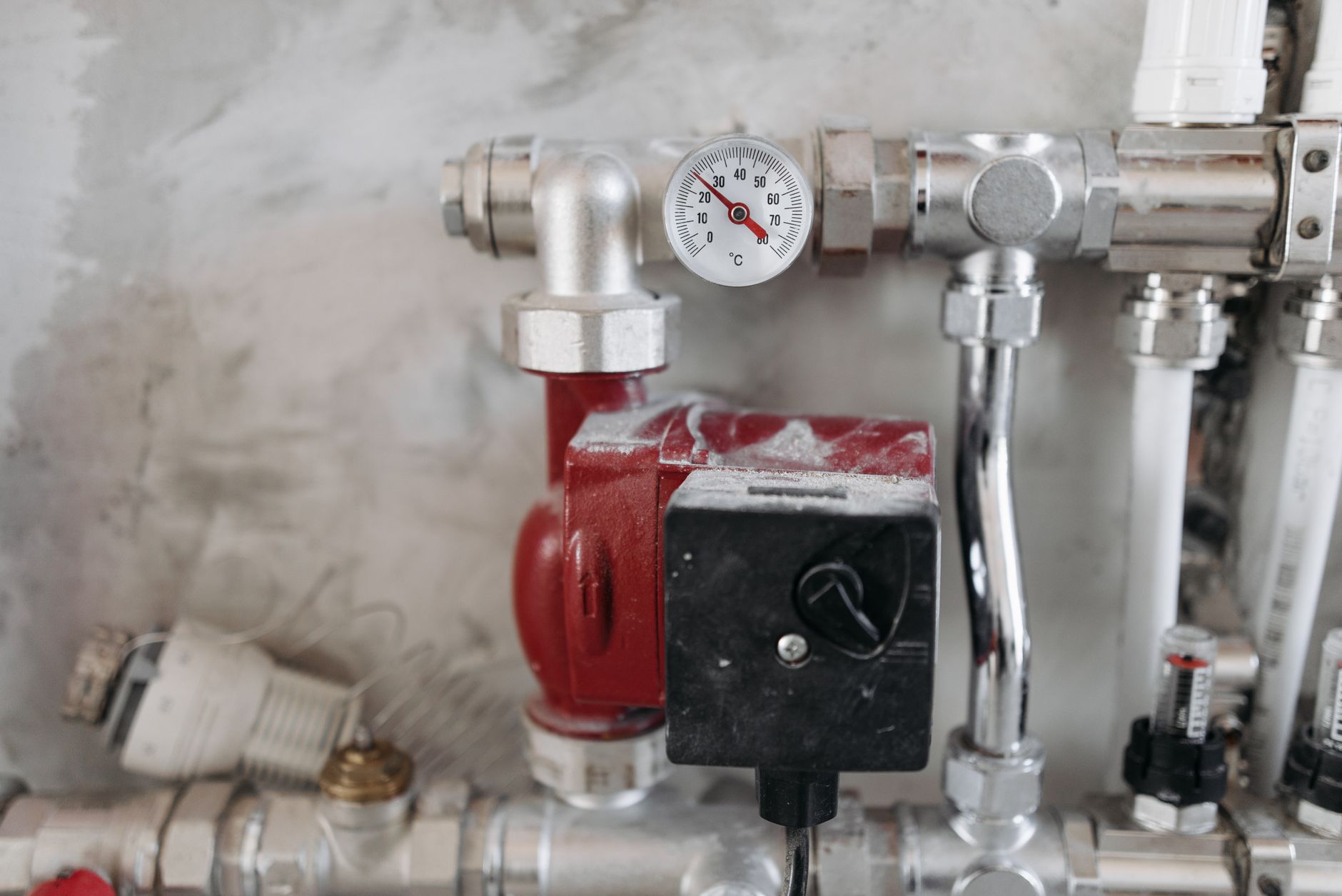
The Grundfos Scala2 is a self-priming, variable-speed booster that holds one steady outlet pressure no matter how many fixtures are open. Instead of slamming on at full speed and waiting for a pressure switch to cut out, it reads flow and pressure continuously and ramps the motor to match demand. You get no 20 psi swing between cut-in and cut-out, and no oversized pressure tank bolted to a concrete floor. Turn on a shower and a washing machine at the same time and the pressure barely moves.
Most owners use it one of two ways: on a shallow well or cistern with suction lift under about 25 feet, or on a municipal line that dribbles out of the shower head. It plugs into standard 115V household current, which makes it the easiest whole-house upgrade for a cabin that already has grid power. Fit a sediment prefilter if your source carries grit, and test your water quality first so you know whether you need treatment downstream as well. Certification bodies like the Water Quality Association point to NSF/ANSI 61 and 372 as the standards to look for on any pump that touches drinking water. Check the Grundfos Scala2 on Amazon.
Two things to know before buying. A Scala2 costs several times what a basic jet pump and tank combination does, and it does not tolerate long brownouts or a generator with dirty output. It is also a surface pump, so it cannot pull from a deep well. If your static water level sits 200 feet down the casing, this is the wrong tool, full stop.
Key strengths:
- ✅ Holds constant outlet pressure instead of swinging between two set points
- ✅ Runs on a standard 115V outlet with no controller or special wiring
- ✅ Built-in dry-run protection shuts the motor down before it overheats
- ✅ Quiet enough to sit in a utility room without a vibration pad
- ✅ No large pressure tank required, which frees up real floor space
- ❌ Costs far more than a conventional jet pump and tank package
- ❌ Limited to roughly 25 feet of suction lift, so deep wells are out
- ❌ Sensitive to grit, sand, and unstable generator power
Who it’s for: Homeowners on a shallow well, cistern, or weak city line who want steady pressure without a big pressure tank.
2. Franklin Electric Inline 1100 , Best for boosting weak municipal pressure
The Franklin Electric Inline 1100 is a small in-line booster that splices into existing copper or PEX with two unions. There is no tank, no separate pressure switch, and no priming. Water flows through it and the internal sensor spins the motor up only when someone opens a fixture. It is the least invasive way to fix a house where the city main delivers 40 psi at the meter and 15 psi at the upstairs shower head.
The 1/2 HP motor handles two to three fixtures at once, which covers most households. It runs on 115V and draws modest current, so a standard circuit is fine. Mount it horizontally with the arrow pointing downstream and give it a bypass so you can service it without shutting off the whole house. That last detail matters more than the spec sheet. A failed booster with no bypass means no water at all until a plumber shows up.
It is not a well pump, and this is where people get into trouble. The Inline 1100 boosts pressure, it does not create flow. If your well or municipal line cannot supply the volume, the pump will cavitate and eventually burn out. Keep it on city water or on a gravity-fed cistern with decent head, and leave well duty to a pump built for it.
Key strengths:
- ✅ Installs inline on existing pipe with two union connections
- ✅ No tank or external pressure switch to mount or wire
- ✅ Quiet operation compared to a cycling jet pump
- ✅ Boosts only when a fixture is open, so it is not running all day
- ❌ Boosts pressure but cannot create flow it does not already have
- ❌ Needs inlet pressure to work and will cavitate without it
- ❌ A failure with no bypass leaves the house with no water at all
Who it’s for: Anyone whose municipal supply has enough volume but not enough pressure at the tap.
3. Goulds J5S , Best for shallow wells and cisterns on a budget
The Goulds J5S is the old-fashioned answer to on demand water, and that is a compliment. It is a cast iron convertible jet pump rated 1/2 HP, and with a shallow well ejector it lifts water from roughly 25 feet down. Bolt it to a pressure tank, wire it to a 30/50 or 40/60 psi switch, and you have a system that has worked in farmhouses for fifty years. Parts are cheap and every well contractor in the county has one on the truck.
Understand what you are buying. The pump runs at one speed, fills the tank to the cut-out setting, and shuts off. Pressure then falls as the tank drains until it hits cut-in and the motor restarts. That swing is normal, and it is exactly what constant-pressure pumps exist to eliminate. You can tame it with a larger tank or a cycle stop valve, and if you go that route, read our water storage tank maintenance guide so the bladder and air charge stay in spec. A waterlogged tank is the single most common reason a jet pump short-cycles and dies young.
Head math matters more than most people expect. One psi equals 2.31 feet of vertical lift, so a 40/60 switch on a well 20 feet below the pump asks the motor to work harder than a 30/50 setting would. Set the switch for your actual fixtures and your actual lift, not for whatever the factory preset happens to be.
Key strengths:
- ✅ Lowest upfront cost of any option on this list
- ✅ Simple design that any well contractor can repair
- ✅ Parts available at farm stores and hardware shops nationwide
- ✅ Works on shallow wells, cisterns, and spring boxes
- ✅ Forgiving of dirty power and voltage sag from a generator
- ❌ Delivers a full 20 psi pressure swing between cut-in and cut-out
- ❌ Noisy enough to hear through a wall
- ❌ Requires a pressure tank, which adds cost and maintenance
- ❌ Useless on any well deeper than about 25 feet
Who it’s for: Budget-minded owners of shallow wells or cisterns who want a simple, repairable pump with parts on every shelf.
4. Grundfos SQE with CU301 , Best for deep wells that need constant pressure
The Grundfos SQE is a 3-inch submersible that slides down casing a standard 4-inch pump might not enter on a crooked run. It uses a permanent magnet motor with the electronics built into the pump housing, and paired with the CU301 controller it delivers true constant pressure at the tap. Soft start means no current surge, so a modest generator or inverter can carry it. That combination matters a great deal for anyone running a well on backup power.
Dry-run protection is the other headline feature. The pump senses when it is running without water, stops, and retries on a timer instead of grinding itself to scrap. On a well that draws down every August, that feature alone pays for the controller. It also logs faults, which turns a mystery shutdown into a readable error code instead of a service call.
The catch is that the CU301 is not optional if you want constant pressure. Buy the pump alone and you get a conventional pressure switch setup with all the swing that comes with it. Sizing also needs care, because the SQE line spans a wide range of flow and head combinations. Match the model to your well’s real yield and depth, not to the biggest number in the catalog. If your casing is only 3 inches and your water sits 150 feet down, this is one of the few pumps that fits.
Key strengths:
- ✅ Delivers constant pressure at the tap with the CU301 controller
- ✅ Soft start eliminates the current surge that stalls small generators
- ✅ Dry-run protection prevents the most common cause of submersible failure
- ✅ Fits 3-inch casing where a standard 4-inch submersible will not
- ✅ Fault logging makes troubleshooting far faster
- ❌ Expensive compared to a standard submersible and pressure switch
- ❌ Constant pressure requires the CU301, which is a separate purchase
- ❌ Repairs usually mean a dealer and a service call
Who it’s for: Deep-well owners who want constant pressure and reliable dry-run protection, especially those on backup power.
5. Shurflo 2088 Series , Best for off-grid cabins, RVs, and 12V systems
The Shurflo 2088 series is the pump you find in almost every RV, boat, and off-grid cabin running on 12 volts. It moves about 3.3 GPM at 45 psi, self-primes up to several feet, and starts and stops on an internal demand switch the moment a faucet opens. No pressure tank, no controller, no inverter. Wire it to a battery through a fuse and you have running water.
Draw is roughly 8 amps at 12 volts, which a 100 amp-hour battery bank shrugs off for normal cabin use. The pump is not silent and it is not fast. A shower at 2.5 GPM will feel the difference from a 3.3 GPM pump at full tilt, especially if someone flushes a toilet at the same moment. Mount it on rubber feet, put a strainer on the inlet, and keep a spare pressure switch on the shelf. The switch is the part that fails, and it costs less than lunch. Check the Shurflo 2088 on Amazon.
For longer storage and backup, pair it with a gravity-fed tank rather than pulling straight from a creek. Our notes on emergency water storage cover how to size that tank properly. And if your source is surface water instead of a well, treat it before you drink it. No pump removes Giardia.
Key strengths:
- ✅ Runs directly on 12V DC with no inverter or controller
- ✅ Internal demand switch means no pressure tank needed
- ✅ Self-priming and easy to replace in the field
- ✅ Low current draw that suits small battery banks
- ✅ Cheapest way to get running water at an off-grid cabin
- ❌ Only 3.3 GPM, so two fixtures at once strain it
- ❌ Audible rattle that carries through thin cabin walls
- ❌ Pressure switch is a wear item that fails every few years
- ❌ Cannot serve a deep well or a long pipe run
Who it’s for: Cabin, RV, and van owners running a 12V system with modest, one-fixture-at-a-time water demand.
6. Grundfos SQFlex , Best for solar-powered off-grid wells
The SQFlex is built for wells where there is no power line and never will be. It runs on a wide DC voltage range straight from a solar array, and it also accepts AC from a generator or inverter. The built-in electronics handle maximum power point tracking, so the array does not need a separate charge controller in the chain. Models span from a few GPM at high head to much larger flows at shallow depth. Check the Grundfos SQFlex on Amazon.
Two rotor designs cover different jobs, and choosing wrong is the expensive mistake. The helical rotor version is for deep wells and high lift, and it keeps pumping in weak morning and evening light. The centrifugal version is for high flow at moderate depth. Size the array for your worst month, not your best one, because a December array in Montana produces a fraction of what it does in June. Panels are cheap. Pulling a pump to fix a sizing error is not.
There is no battery in a typical SQFlex install. The pump runs when the sun is out and fills a tank, which is why it pairs so well with cistern storage. If you want pressure at the tap after dark, you need a second small pump on the tank or a gravity feed. The pump itself sits at the premium end of the market, and pulling it for service means pulling the drop pipe. Do the install right the first time.
Key strengths:
- ✅ Runs directly from a solar array with no battery bank
- ✅ Built-in maximum power point tracking removes a controller from the system
- ✅ Accepts both DC solar input and AC generator input
- ✅ Helical rotor model keeps producing in low light and at high head
- ✅ Handles deep wells that surface pumps cannot touch
- ❌ Premium price compared to any AC submersible
- ❌ Service means pulling the drop pipe, which is a full day of work
- ❌ Produces no water at night without a storage tank and second pump
Who it’s for: Off-grid well owners with no practical access to grid power who need serious volume and are willing to store it in a tank.
Frequently Asked Questions
What exactly is an on demand water pump?
It is any pump that starts when a fixture opens and stops when flow ends, usually triggered by a pressure switch, a flow sensor, or an internal demand switch. The term describes the control behavior, not one specific product. Jet pumps, submersibles, boosters, and 12V diaphragm pumps can all be on demand.
Do I still need a pressure tank with an on demand pump?
It depends on the pump. Conventional jet pumps and standard submersibles need a tank to buffer the pressure switch and prevent rapid cycling. Variable-speed models like the Grundfos Scala2 and controller-driven submersibles hold pressure electronically and can run with no tank or a very small one.
How many GPM does a typical house actually need?
A shower head runs about 2.5 GPM, a kitchen faucet about 2.2 GPM, and a washing machine can pull 5 GPM during fill. Running two fixtures at once puts you near 5 GPM, and three fixtures pushes past 7 GPM. Size the pump for that peak, not for average daily use.
Will an on demand pump pull water from a deep well?
Suction pumps will not. Jet pumps and surface boosters top out around 25 feet of lift because atmospheric pressure cannot push water higher than that. Anything deeper requires a submersible pump that sits down the casing in the water.
Can I run an on demand water pump on solar power?
Yes, and you have two routes. A DC diaphragm pump can run from a battery bank charged by panels, which gives you water any time of day. A solar submersible like the Grundfos SQFlex runs directly off the array with no battery and pumps into a tank whenever the sun is out.
How long do on demand water pumps last?
A quality submersible typically runs 10 to 15 years before it needs pulling. Jet pumps and boosters often last 8 to 12 years. 12V diaphragm pumps are the shortest-lived at 3 to 7 years, and the pressure switch is usually the first part to fail.
What Should You Remember?
- Match the pump to your well depth first. Suction pumps top out near 25 feet, so anything deeper needs a submersible.
- Size for peak demand, not average use. A shower plus a washing machine can pull 7 GPM or more at the same time.
- Constant pressure costs more and earns it. Variable-speed pumps erase the 20 psi swing that makes showers miserable.
- 12V diaphragm pumps are the off-grid default. No tank, no inverter, no controller, just a battery and a fuse.
- Solar submersibles need storage, not batteries. Pump into a tank all day and pressurize from the tank after dark.
- Dry-run protection saves pumps. A well that draws down in August will destroy an unprotected motor.
- Test private well water every year. EPA rules cover public systems, not your well.
This article is for general information only. Water purification and storage carry health and safety risks , always follow local regulations and manufacturer guidance.