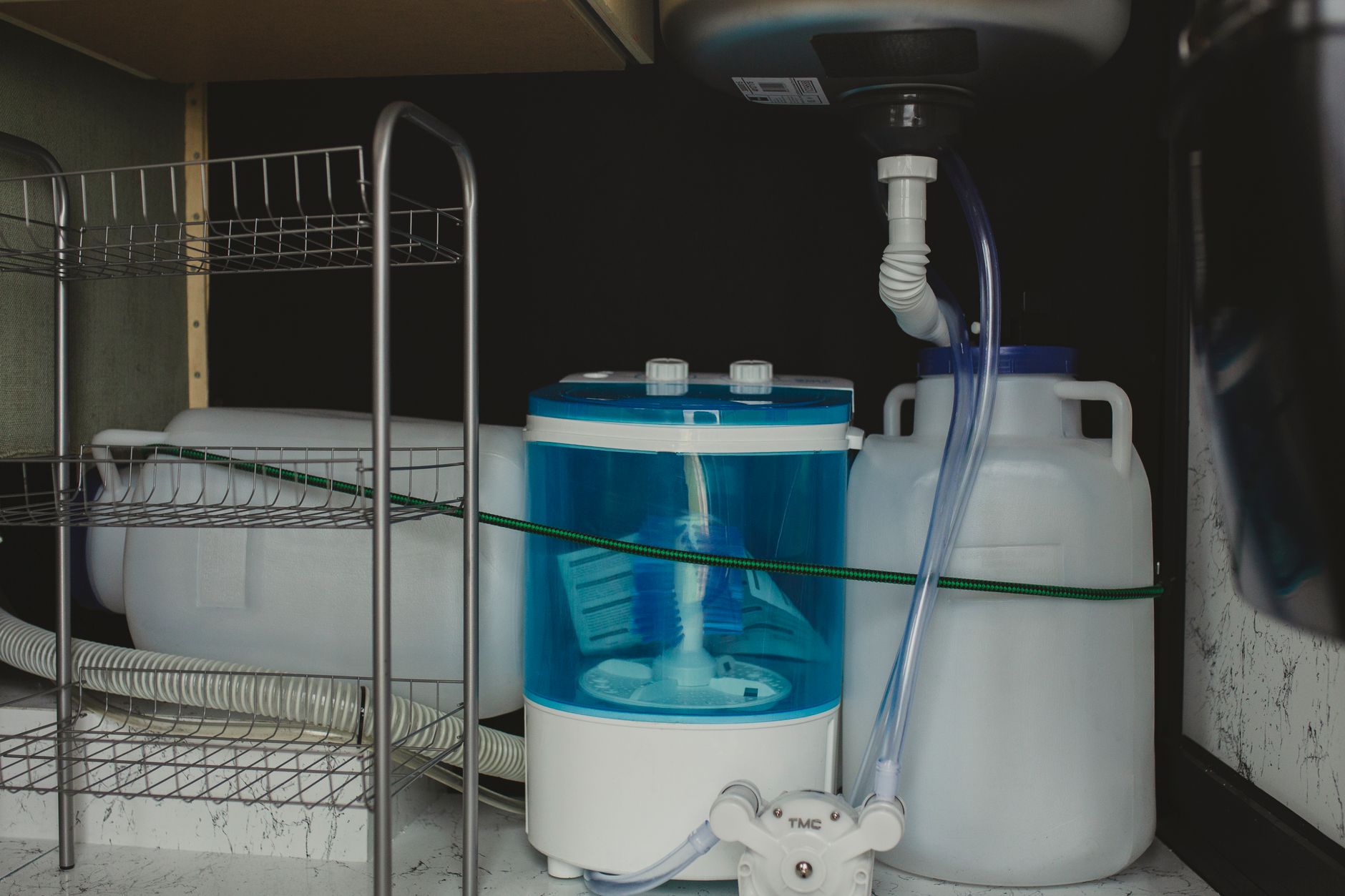
Storing water above ground is the simplest way to guarantee your household has water when the well pump quits, the power goes out, or the rain stops falling. A tank sitting on a gravel bed or concrete pad needs no excavation, no crane, and no permit in most rural counties. Plenty of people start with a few 55-gallon drums and quickly learn that is not enough. The CDC recommends keeping at least one gallon per person per day for drinking and sanitation, which means a family of four burns through 28 gallons in a week before anyone takes a shower. Good emergency water storage planning starts with honest math about consumption.
Above ground tanks come in four materials: polyethylene, galvanized steel, stainless steel, and concrete. Each behaves differently in sunlight, freeze cycles, and water chemistry. Polyethylene dominates the residential market because it is light, cheap, and never rusts. Steel holds its shape better in extreme heat and can be repaired by a welder. Any tank you plan to drink from should carry NSF/ANSI 61 certification, the standard the EPA’s drinking water program uses to judge materials that contact potable water. Without that stamp you are guessing whether the plastic leaches into your supply. If you are building an off-grid water system, also remember that gravity head or a booster pump has to move that water into the house.
Sizing is where most first-time buyers get it wrong. A 2,000-gallon tank sounds enormous until you divide it by daily use. The EPA estimates the average American family uses more than 300 gallons of water per day at home, so that tank covers roughly six days with no refills. A 500-gallon tank buys you a long weekend. Add livestock, a garden, or a pressure washer and the numbers shift again. Work backward from your worst-case scenario, not your average Tuesday. Storage also degrades without attention: a tank sitting in the sun with no lid grows algae within a month, which is why a regular tank cleaning routine matters more than the brand printed on the side.
We compared these five tanks on wall thickness, potable water certification, fitting configuration, UV resistance, and how easily each one plumbs into an existing well or gutter system. Capacity range and cost per gallon carry a lot of weight for anyone buying on a budget, so cheaper options are not penalized simply for being cheap. Every tank here can store water safely when configured correctly, though some are better suited to irrigation and livestock than to drinking. If you collect from a roof, read the rainwater harvesting guide before you buy, because first-flush diversion and screening change which tank shape works best on your property.
How Do the Top Options Compare?
| Tank | Best For | Capacity Range | Material | Price |
|---|---|---|---|---|
| Norwesco Poly Vertical Tank | Best overall household storage | 65 to 3,000+ gallons | Polyethylene | Check price |
| Enduraplas Ribbed Vertical Tank | Best for potable water | 100 to 2,500 gallons | Food-grade polyethylene | Check price |
| Bushman Slimline Rainwater Tank | Best for tight spaces | 200 to 1,000 gallons | Polyethylene | Check price |
| Snyder Heavy-Duty Vertical Tank | Best for large volume | 500 to 5,000+ gallons | Heavy-wall polyethylene | Check price |
| Behlen Galvanized Stock Tank | Best budget pick | 40 to 500 gallons | Galvanized steel | Check price |
Capacities are manufacturer ranges and vary by model. Retail pricing shifts constantly, so use the links above for current numbers. Any tank used for drinking water should be NSF/ANSI 61 certified, disinfected before first fill, and tested periodically afterward.
1. Norwesco Poly Vertical Tank , Best Overall Above Ground Tank
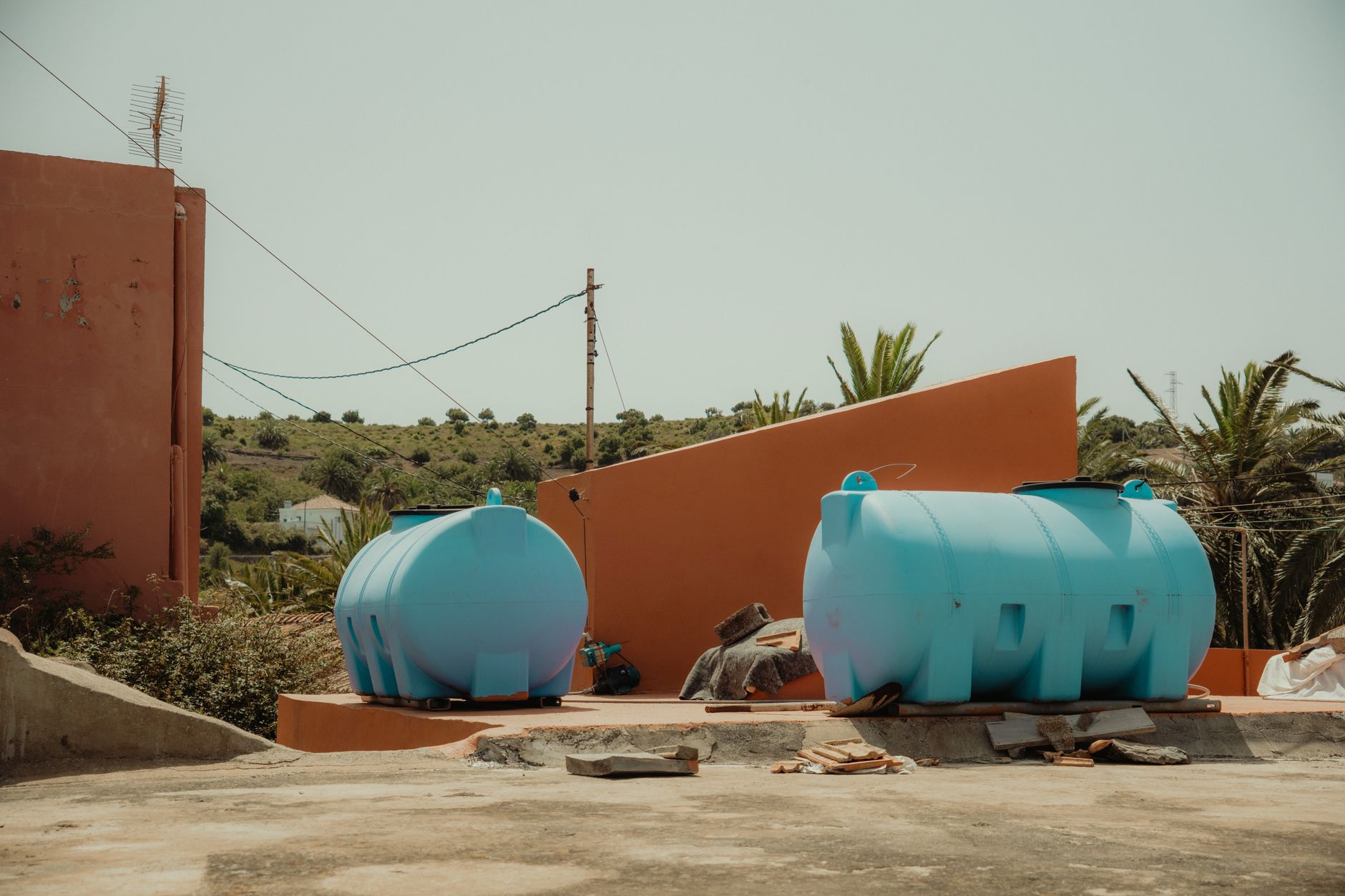
Norwesco builds the tank most rural households end up buying. These are rotationally molded polyethylene, one piece with no seams, with a molded-in bulkhead fitting and a screw-on lid that actually seals. Sizes run from small 65-gallon units past 3,000 gallons, so you can start small and add capacity later without switching brands. The walls are thick enough to hold water without bulging, and the dark green or black pigment blocks most light, which slows algae growth compared to translucent tanks.
The real advantage is availability. Farm stores, co-ops, and plumbing suppliers stock them, so you can put a hand on one before buying instead of trusting a shipping photo. Plumbing a well into one is straightforward: a float valve on the inlet, a bulkhead on the outlet, and a jet pump or transfer pump on the far side. Just test your well water before you fill, because sediment and iron settle out in the tank and need periodic flushing. Check the Norwesco water tank on Amazon.
Two things to plan for. Larger sizes ship freight, and the freight can approach the tank price, so buy locally when you can. Poly walls also expand and contract with temperature. If you hard-plumb both inlet and outlet with rigid PVC, the moving wall will crack a fitting. Use a short section of flexible hose at every connection.
Key strengths:
- ✅ Rotational molded polyethylene resists UV damage and never rusts
- ✅ Capacity range from 65 to over 3,000 gallons in one product family
- ✅ Molded-in fittings and a sealing lid simplify plumbing and keep debris out
- ✅ Widely stocked at farm stores and plumbing suppliers
- ✅ Dark, opaque walls block light and slow algae growth
- ❌ Freight shipping on large sizes adds real cost
- ❌ Very heavy when full, so it needs a level pad that will not settle
- ❌ Walls flex with temperature swings, which cracks rigid connections
Who it’s for: Best for households that want a proven, widely available poly tank for well water, hauled water, or general household storage.
2. Enduraplas Ribbed Vertical Tank , Best for Potable Water Storage
Enduraplas tanks are built from food-grade polyethylene and carry the certifications that matter when people will actually drink from them. The ribbed wall design adds hoop strength without much extra weight, so a 1,000-gallon unit holds its shape through a full summer in direct sun. Fittings are molded in at the factory with options from 3/4 inch up to 2 inch outlets, and the domed lid keeps rain, leaves, and rodents out. That lid matters more than most buyers realize. An open tank collects mosquito larvae and roof grit within weeks.
For drinking water, plan the treatment side as carefully as the storage side. The CDC’s drinking water guidance treats stored water as a potential growth medium, not a sterile reservoir, which is why you disinfect on fill and test every few months. A sediment filter ahead of the tank and a final purification step after it keep the supply safe without overbuilding the system. Check the Enduraplas water tank on Amazon.
Enduraplas costs more per gallon than a basic Norwesco, and the ribbing makes the interior slightly harder to scrub by hand. That is the trade for certification and a wall profile that handles heat better than flat-sided consumer tanks.
Key strengths:
- ✅ Food-grade polyethylene with potable water certification
- ✅ Ribbed walls resist bulging in high heat
- ✅ Factory-molded fittings in multiple sizes up to 2 inch
- ✅ Domed lid seals out rain, insects, and rodents
- ✅ Noticeably lighter than a comparable steel tank
- ❌ Higher cost per gallon than standard poly tanks
- ❌ Ribbed interior is harder to scrub clean by hand
- ❌ Not stocked everywhere, so shipping is often required
Who it’s for: Best for anyone storing water meant for drinking and cooking, where certification is not optional.
3. Bushman Slimline Rainwater Tank , Best for Tight Spaces
Bushman slimline tanks are long and narrow, roughly the depth of a wheelbarrow, which lets you tuck one against a foundation wall or along a fence line where a round tank would never fit. Capacities run from about 200 to 1,000 gallons in a single footprint. The slim shape works well under a gutter downspout, where the roof feeds the tank directly and gravity handles the rest. Most models ship with inlet screening and a threaded outlet sized for a garden hose or a small transfer pump.
These are rainwater tanks first, so water quality depends on what happens before the tank. First-flush diversion and roof screening matter more than tank brand, because the first ten minutes of rain carries most of the bird droppings and roof grit. A simple diverter and a leaf screen make a bigger difference than any filter you add later. Check the Bushman rainwater tank on Amazon.
The knock on slimline tanks is capacity per footprint and the need for a truly flat pad. A long narrow tank on uneven ground will crack at the base. Set it on compacted gravel or a concrete slab, never on bare dirt that softens after a heavy rain.
Key strengths:
- ✅ Narrow footprint fits along walls, fences, and side yards
- ✅ Designed specifically for downspout and gutter collection
- ✅ Ships with inlet screening and a usable threaded outlet
- ✅ Low profile keeps it out of sight in residential areas
- ✅ Lighter than round tanks of similar capacity, so placement is easier
- ❌ Lower capacity per footprint than a round vertical tank
- ❌ Requires a genuinely level pad or the base will crack
- ❌ Not ideal for well water or hauled water setups
Who it’s for: Best for suburban and rural homes with limited space that want to capture roof runoff close to the garden.
4. Snyder Heavy-Duty Vertical Tank , Best for Large Volume Storage
Snyder builds industrial-grade polyethylene tanks, and the heavy-duty vertical line is what you see behind commercial greenhouses and small municipal buildings. Wall thickness runs heavier than consumer tanks, fittings are molded in with steel-reinforced options, and capacities climb past 5,000 gallons. If you are storing water for a fire-suppression reserve, a market garden, or a household that hauls water by truck, this is the tier where the math starts working in your favor.
The practical advantage at this size is a lower cost per gallon. Doubling capacity rarely doubles the price, so one large tank usually beats three small ones on both cost and plumbing complexity. The catch is the pad. A 5,000-gallon tank holds over 40,000 pounds of water, which is why the spec sheet calls for reinforced concrete rather than gravel. Check local rules before you pour. Some jurisdictions treat large storage as a structure and expect a setback from property lines.
One more consideration: at 5,000 gallons, water sits long enough to go stale. Turn the volume over on a schedule, or treat and test it regularly instead of assuming it stays fresh on its own.
Key strengths:
- ✅ Heavier wall construction than consumer-grade tanks
- ✅ Capacities past 5,000 gallons for bulk and fire reserve storage
- ✅ Lower cost per gallon at large sizes
- ✅ Steel-reinforced fitting options handle bigger pumps
- ❌ Requires a reinforced concrete pad, not gravel
- ❌ Freight-only shipping with liftgate fees
- ❌ Large volumes turn over slowly and need scheduled treatment
Who it’s for: Best for farms, fire reserves, and households that need serious volume rather than a weekend buffer.
5. Behlen Galvanized Stock Tank , Best Budget Pick
Round galvanized stock tanks are the cheapest way to store water above ground, and they are sitting on the shelf at nearly every farm store in the country. The price per gallon beats anything else on this list, and steel shrugs off sun, ice, and the kind of abuse that cracks plastic. They also drain completely, which matters if you want a tank you can tip and scrub out with a broom. For irrigation, livestock, and short-term backup, they do the job.
Drinking water is a different conversation. Standard galvanized tanks are not certified for potable storage, and the zinc coating is not something you want leaching into a supply you drink from daily. If potable use matters, buy stainless steel or food-grade poly instead. For everything else, a galvanized tank with a floating lid to cut evaporation and algae is a practical, low-cost answer that has worked on farms for a century.
The weak points are rust at the seams after years of standing water and the simple fact that a full tank is heavy and hard to move. Winter is the real test. Water that freezes solid can split the seam, so drain the tank or keep it circulating once temperatures drop.
Key strengths:
- ✅ Lowest cost per gallon of any option here
- ✅ Galvanized steel resists UV, impact, and rough handling
- ✅ Available in person at nearly every farm supply store
- ✅ Drains completely and is easy to scrub out
- ✅ Works with a simple floating lid to reduce evaporation
- ❌ Not certified for potable water storage
- ❌ Seams can rust after several years of standing water
- ❌ Freezing water can split the tank at the seam
Who it’s for: Best for irrigation, livestock, and short-term backup where drinking water certification is not required.
Frequently Asked Questions
How big of an above ground water tank does a family of four need?
Start with consumption. The EPA estimates the average American household uses more than 300 gallons per day, so a 2,000-gallon tank covers about six days without refilling. If you are sizing for drinking and cooking only, the CDC’s one-gallon-per-person-per-day figure means a 500-gallon tank lasts months.
Are above ground water tanks safe for drinking water?
Only if the tank is certified to NSF/ANSI 61 or an equivalent standard and you disinfect and test the water on a schedule. Standard galvanized stock tanks and unmarked polyethylene tanks are not made for potable storage and can leach into the supply.
Will an above ground water tank freeze in winter?
Yes, if it is full, exposed, and the water is not moving. Insulating the tank walls, burying supply lines below the frost line, and keeping water circulating all help. Many owners simply drain and bypass the tank during hard freezes.
Can I bury an above ground tank?
Usually not. Most above ground tanks lack the wall strength to resist soil pressure and will collapse inward once backfilled. If you want the tank underground, buy one specifically rated for burial.
How often should I clean an above ground water tank?
Once a year for potable water, and more often if the tank is exposed to light or collects sediment. Flush the tank, scrub the walls with a mild chlorine solution, rinse thoroughly, then refill and test.
Poly or steel: which above ground tank lasts longer?
A well-made poly tank kept out of direct sun can last 20 years or more, and steel can match that if the coating holds up. Steel fails at the seams when water sits against bare metal, while poly fails at fittings and from UV exposure.
What Should You Remember?
- Match the tank to the use: potable storage needs NSF/ANSI 61 certification, irrigation and livestock water do not.
- Size from daily use: the EPA puts average household consumption above 300 gallons per day, so a 2,000-gallon tank is roughly six days.
- Pour a real pad: a full 5,000-gallon tank weighs over 40,000 pounds and will sink into bare dirt.
- Leave flex at the fittings: poly walls move with temperature, so use short flexible connections instead of rigid PVC.
- Keep light out: opaque walls and a sealed lid slow algae more effectively than any additive.
- Plan for winter: drain, insulate, or circulate, because ice splits steel seams and cracks poly fittings.
- Budget the whole system: pump, float valve, filter, and pad often cost as much as the tank itself.
This article is for general information only. Water purification and storage carry health and safety risks , always follow local regulations and manufacturer guidance.